


So wählen Sie das richtige Tiegelmaterial aus: Ein umfassender Leitfaden
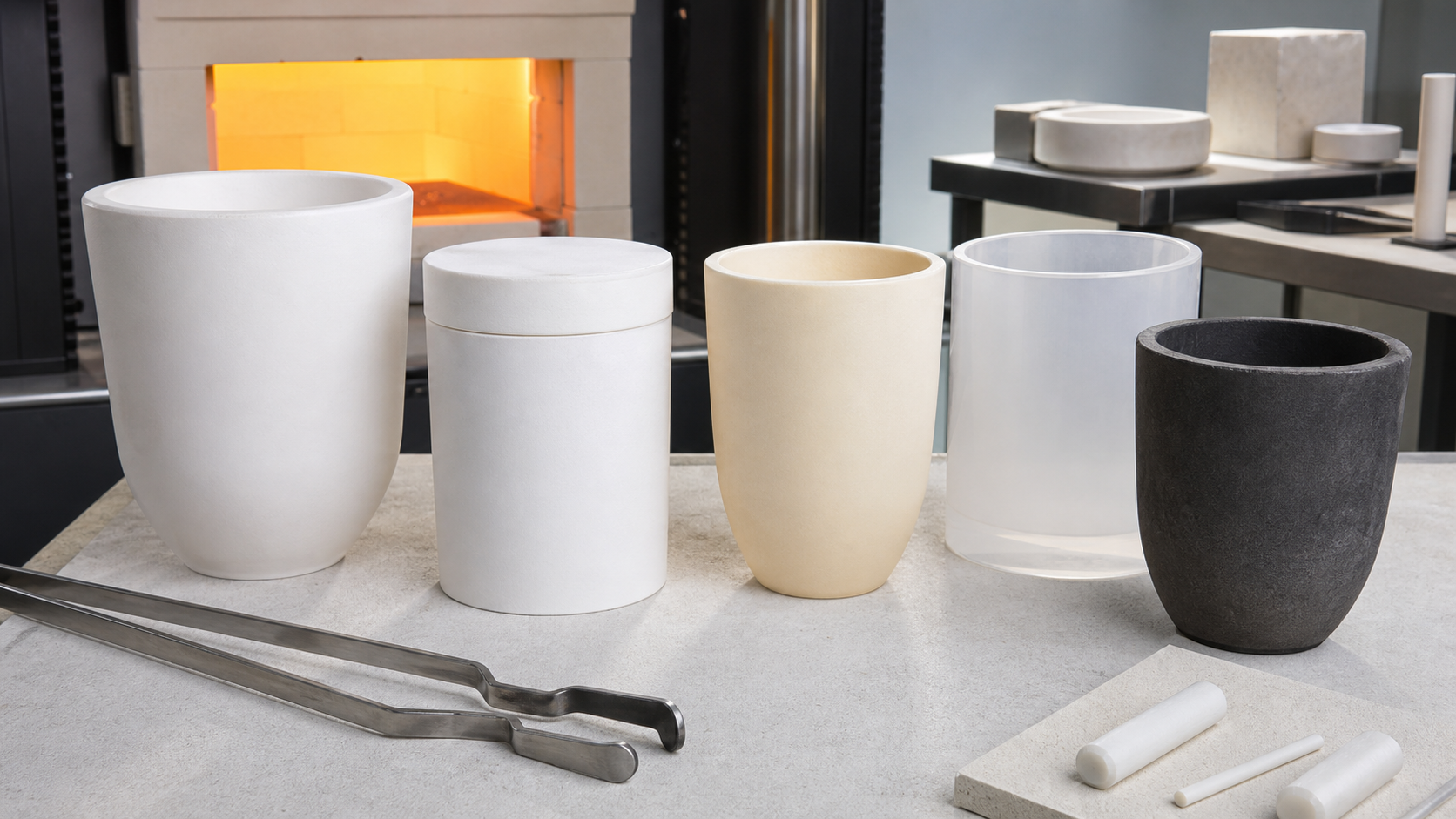
Kurz gesagt: Die Wahl des richtigen Tiegelmaterials hängt von fünf Faktoren ab: der Höchsttemperatur, der Ofenatmosphäre, der Chemie der Schmelze, den Temperaturwechseln und der Verunreinigungstoleranz. Aluminiumoxid ist eine zuverlässige Basis, Bornitrid zeichnet sich durch hohe Temperaturwechselbeständigkeit und gutes Ablösungsverhalten aus, Quarz ist für viele Laborprozesse besonders rein, Zirkonoxid hält sehr hohen Temperaturen stand und Graphit eignet sich am besten für den Einsatz im Vakuum oder in inerten Atmosphären.
Die Wahl des Tiegelmaterials klingt einfach – bis zum ersten Riss im Tiegel, zur ersten Verunreinigung der Schmelze oder zum ersten fehlgeschlagenen Temperaturzyklus. Ein Tiegel ist nicht nur ein Behälter. Er ist Teil des thermischen Systems, des chemischen Systems und des Plans zur Verunreinigungskontrolle.
Für Forscher und Verfahrenstechniker kann ein ungeeigneter Tiegel die Testergebnisse verfälschen. Er kann mit der Probe reagieren, Partikel abgeben, sich bei hohen Temperaturen verformen oder beim Abkühlen versagen. Dieser Leitfaden bietet eine praktische Möglichkeit, gängige Tiegelwerkstoffe zu vergleichen, bevor Laborgeräte oder maßgefertigte Keramikteile bestellt werden.
Das Ziel besteht nicht darin, einen einzigen, allumfassenden Gewinner zu benennen. Das Ziel ist es, die Auswahl zügig einzugrenzen und anschließend die Güteklasse, die Geometrie und die Prozessbedingungen im Rahmen einer technischen Prüfung zu bestätigen.
Welches ist das beste Tiegelmaterial für Arbeiten bei hohen Temperaturen?
Das beste Tiegelmaterial ist dasjenige, das den Temperaturen, der Atmosphäre und den chemischen Bedingungen des Prozesses gleichermaßen standhält. Aluminiumoxid ist oft die erste Wahl für allgemeine Hochtemperaturanwendungen. Bornitrid eignet sich aufgrund seiner Temperaturwechselbeständigkeit und seiner nichtbenetzenden Eigenschaften. Zirkonoxid ist für sehr hohe Temperaturen geeignet. Graphit erfordert ein Vakuum oder ein Inertgas.
Die Temperatur allein reicht nicht aus. Ein Graphittiegel hält extremer Hitze unter inerten Bedingungen stand, ist jedoch bei hohen Temperaturen an der Luft keine gute Wahl, da hier die Oxidation zu einem erheblichen Risiko wird. Quarz ist rein und in vielen Laborprozessen nützlich, wird jedoch schon weit unterhalb der Temperatur von Zirkonoxid weich.
Verwenden Sie die nachstehende Tabelle als erstes Screening-Instrument und nicht als endgültige Auslegungsgrenze. Die Lieferantenqualität, die Wandstärke, die Ofenatmosphäre, die Aufheizgeschwindigkeit und die chemische Zusammensetzung der Probe können den sicheren Bereich beeinflussen.
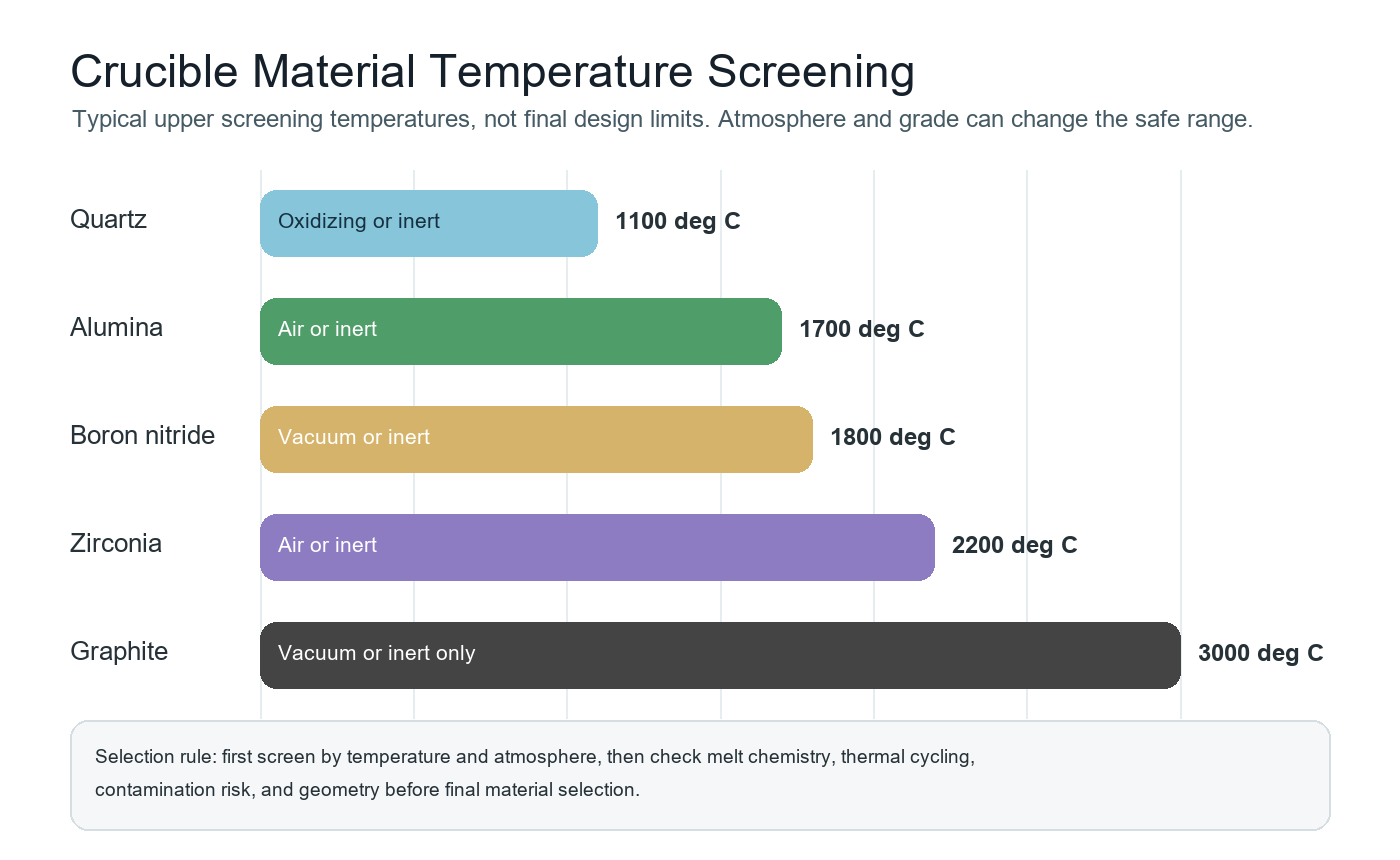
| Tiegelwerkstoff | Typische Siebtemperatur | Beste Atmosphäre | Hauptvorteil | Beobachtungspunkt |
|---|---|---|---|---|
| Quarz | 1.100 °C | Luft, Vakuum oder Inertgas | Sauber, transparent, geringe Wärmeausdehnung | Erweichung und Entglasung bei hoher Hitze |
| Tonerde | 1.700 °C | Luft oder Inertgas | Solide Grundlage für thermische und chemische Stabilität | Der Thermoschock hängt von der Geometrie und der Anstiegsgeschwindigkeit ab |
| Bornitrid | 1.800 °C | Vakuum oder Inertgas | Temperaturwechselbeständigkeit und Ablösungsverhalten | Grenzen der Oxidation und der mechanischen Festigkeit |
| Zirkoniumdioxid | 2.200 °C | Luft oder Inertgas | Sehr hohe Temperaturbeständigkeit | Überprüfung der Kosten und der Temperaturwechselbeständigkeit |
| Graphit | 3.000 °C | Vakuum oder Inertgas | Extreme Hitze und gute Wärmeleitfähigkeit | Oxidiert an der Luft bei hohen Temperaturen |
Diese Screening-Werte stimmen mit den in der Fachliteratur üblicherweise angegebenen Materialverhalten für Aluminiumoxidkeramik, Eigenschaften von Graphit, sowie die aktuellen Produktempfehlungen des „Advanced Ceramics Hub“ für Tiegel aus Bornitrid, Tiegel aus Zirkonoxidkeramik, und Quarz-Tiegel.
Fangen Sie mit der Temperatur an, aber belassen Sie es nicht dabei
Die Temperatur ist der erste Filter, da sie ungeeignete Materialien schnell aussortieren kann. Erreicht der Ofenzyklus in Luft 1.600 °C, scheidet Quarz in der Regel aus. Erreicht der Prozess 2.000 °C, kommt möglicherweise Zirkonoxid in Betracht. Liegt die Prozesstemperatur über 2.500 °C, kommt Graphit möglicherweise nur dann in Frage, wenn der Sauerstoffgehalt kontrolliert wird.
Die nächste Frage ist, wie sich die Temperatur verändert. Ein langsames Aufheizen unterscheidet sich vom schnellen Einbringen in einen heißen Ofen. Unter einem Thermoschock versteht man Risse, die durch schnelle Temperaturänderungen verursacht werden. Bei schwierigen Aufheiz- und Abkühlgeschwindigkeiten kommen häufig Materialien wie Bornitrid in Betracht.
Auch die Geometrie spielt eine Rolle. Ein dünnwandiger Tiegel kann anders auf Temperaturänderungen reagieren als ein dickwandiges Sonderteil. Ecken, Deckel, Löcher, Rillen und starke Durchmesseränderungen können zu Spannungskonzentrationen führen. Bei Sonderanfertigungen sollten Sie die Zeichnung und das Rampenprofil frühzeitig zur Verfügung stellen.
Inwiefern beeinflusst die Ofenatmosphäre die Wahl des Tiegels?
Die Ofenatmosphäre kann ein gutes Material in ein schlechtes verwandeln. Luft, Vakuum, Stickstoff, Argon, Wasserstoff und reduzierende Atmosphären beeinflussen die Oxidation, die Verunreinigung und die chemische Stabilität. Graphit eignet sich für den Einsatz im Vakuum oder in einer Inertgasatmosphäre, doch die Oxidation schränkt seine Verwendung an der Luft ein. Auch bei BN ist eine Überprüfung der Atmosphärenbedingungen erforderlich.
Aufgrund der jeweiligen Umgebungsbedingungen kann eine einfache Rangliste nach Temperatur irreführend sein. Graphit mag in einer Hochtemperaturtabelle zwar am besten abschneiden, doch durch den Kontakt mit Sauerstoff kann es ungeeignet werden. Aluminiumoxid hat zwar eine niedrigere Höchsttemperatur als Graphit, kann aber unter oxidierenden Bedingungen praktischer sein.
Bornitrid ist in Vakuum- oder Inertgasatmosphären oft eine attraktive Wahl, da es gut bearbeitbar ist, thermischen Schocks standhält und gegenüber vielen Schmelzen ein gutes Ablösungsverhalten aufweist. Für Ofenvorrichtungen, Düsen, Auflegeplatten und Tiegel, Tiegel aus Bornitrid sollten überprüft werden, wenn das Anhaften oder thermische Zyklen das Hauptproblem darstellen.
Quarz eignet sich gut für viele saubere Laborumgebungen, insbesondere wenn es auf Sichtprüfungen oder eine geringe Kontamination ankommt. Bei höheren Temperaturen kann Quarz jedoch weich werden oder seine Struktur verändern, weshalb er genau auf den jeweiligen Wärmezyklus abgestimmt werden sollte.
Passen Sie den Tiegel an die Zusammensetzung der Schmelze oder der Probe an
Die chemische Verträglichkeit entscheidet darüber, ob der Tiegel neutral bleibt oder in die Reaktion einbezogen wird. Manche Schmelzen greifen Oxide an. Manche Proben nehmen Kohlenstoff auf. Manche Verfahren vertragen keine Verunreinigungen durch Bor, Silizium, Aluminium oder Zirkonium.
Bei Oxidproben ist Aluminiumoxid oft ein praktischer Ausgangspunkt. Es findet breite Anwendung, da es eine hohe Härte, elektrische Isolierung und chemische Beständigkeit aufweist. Außerdem lässt es sich gut mit anderen Aluminiumoxid-Komponenten verbinden, wie beispielsweise Aluminiumoxidrohre, Aluminiumoxidplatten, und Sonderanfertigungen aus Aluminiumoxid.
Bei geschmolzenen Metallen oder Prozessen, bei denen das Anhaften ein Problem darstellt, kann Bornitrid hilfreich sein, da seine Oberfläche die Benetzung verringern kann. Bei der Oxidverarbeitung bei sehr hohen Temperaturen ist Zirkonoxid möglicherweise fester als Quarz oder Aluminiumoxid, dennoch sollte die chemische Zusammensetzung der Probe überprüft werden. Bei kohlenstoffempfindlichen Arbeiten ist Graphit möglicherweise nicht geeignet, selbst wenn die Atmosphäre kontrolliert wird.
Die zuverlässigste Angebotsanfrage enthält Angaben zur Probe oder Schmelzfamilie, zur Prozesstemperatur, zur Atmosphäre, zur Haltezeit, zur Aufheizgeschwindigkeit sowie zu den zulässigen Verunreinigungselementen. Anhand dieser Informationen kann der Lieferant die tatsächlichen Ausfallursachen ermitteln, anstatt sich allein auf die Bezeichnung des Werkstoffs zu verlassen.
Aluminiumoxid vs. Bornitrid vs. Zirkonoxid vs. Quarz vs. Graphit
Jedes Tiegelmaterial weist ein anderes Festigkeitsprofil auf. Aluminiumoxid ist die ausgewogene Wahl. Bornitrid eignet sich besonders gut für Temperaturschocks und als Trennmittel. Zirkonoxid ist für sehr hohe Temperaturen gedacht. Quarz eignet sich für saubere Laborarbeiten. Graphit ist für extreme Temperaturen unter sauerstofffreien Bedingungen vorgesehen.
| Material | Wählen Sie diese Option, wenn | Vermeiden Sie dies oder prüfen Sie es sorgfältig, wenn |
|---|---|---|
| Tonerde | Sie benötigen eine kostengünstige Hochtemperaturkeramik für den Einsatz in Luft oder Inertgas | Der Prozess weist einen starken Thermoschock oder eine ungewöhnliche Schmelzchemie auf. |
| Bornitrid | Sie benötigen Temperaturwechselbeständigkeit, Bearbeitbarkeit oder ein nicht benetzendes Verhalten | Der Ofen arbeitet unter oxidierenden Bedingungen bei hoher Temperatur oder das Bauteil ist einer hohen Belastung ausgesetzt |
| Zirkoniumdioxid | Sie benötigen eine sehr hohe Temperaturbeständigkeit und chemische Beständigkeit | Die Kosten, die thermische Zyklen oder die Bauteilgröße stellen die größte Einschränkung dar |
| Quarz | Für Laborarbeiten bei mäßig hohen Temperaturen benötigen Sie einen sauberen Tiegel. | Der Zyklus führt zu einer Milderung der Bedingungen oder beinhaltet aggressive chemische Prozesse |
| Graphit | Sie benötigen extreme Hitze im Vakuum oder in einer inerten Atmosphäre. | Es ist Sauerstoff vorhanden oder eine Verunreinigung durch Kohlenstoff ist nicht zulässig |
Dieser Vergleich ist auch bei der Auswahl von passenden Ofenkomponenten hilfreich. Ein Tiegel wird selten allein verwendet. Schalen, Rohre, Platten, Halterungen, Deckel und Stützen sollten als ein System ausgewählt werden. Falls für den Prozess auch Vorrichtungen benötigt werden, sehen Sie sich die aktuellen Produktseiten für Keramikprodukte an, wie zum Beispiel Tiegel aus Aluminiumnitrid oder Tiegel aus Siliziumnitrid, wenn Wärmeleitfähigkeit, Festigkeit oder besondere Prozessbedingungen eine Rolle spielen.
Welche Angaben sollten Käufer vor der Bestellung eines maßgefertigten Tiegels machen?
Bitte geben Sie die Zeichnung, die Maße, die Toleranzen, die Stückzahl, die Materialpräferenz, die maximale Temperatur, die Umgebungsbedingungen, die Aufheizgeschwindigkeit, die Haltezeit, die chemische Zusammensetzung der Probe sowie die Grenzwerte für Verunreinigungen an. Falls das Material noch nicht endgültig feststeht, reichen Sie bitte den Antrag ein, anstatt nur einen Preis für eine bestimmte Qualität anzufragen.
Eine gute technische Anfrage enthält in der Regel:
- Außendurchmesser, Innendurchmesser, Höhe, Wandstärke und Bodendicke.
- Deckel, Flansch, Ausguss, Löcher, Nuten oder andere geometrische Details.
- Maximaltemperatur und normale Betriebstemperatur.
- Ofenatmosphäre, z. B. Luft, Vakuum, Argon, Stickstoff oder reduzierendes Gas.
- Aufheiz- und Abkühlgeschwindigkeit, falls ein Thermoschock zu befürchten ist.
- Schmelz-, Pulver-, Proben- oder Reaktionschemie.
- Anforderungen an die Reinheit und zu vermeidende Stoffe.
- Prototypenmenge und voraussichtliche Produktionsmenge.
Bei Sonderformen ist es zudem hilfreich anzugeben, ob der Tiegel zum Schmelzen, zur Kalzinierung, zur Verdampfung, zum Sintern, zur Kristallzüchtung oder zur Analyse verwendet wird. Der Herstellungsweg kann sich ändern, wenn aus demselben Material ein kleiner Labortiegel, ein großes Gefäß oder ein präzisionsgefertigtes Bauteil hergestellt werden soll.
Häufige Fehler bei der Auswahl
Der häufigste Fehler besteht darin, die Auswahl ausschließlich anhand der Höchsttemperatur zu treffen. Der zweite Fehler ist, die Umgebungsbedingungen außer Acht zu lassen. Der dritte Fehler ist die Annahme, dass eine Materialbezeichnung immer dieselbe Güteklasse beschreibt. Aluminiumoxid, Bornitrid, Zirkonoxid, Quarz und Graphit können sich hinsichtlich Reinheit, Dichte, Zusatzstoffen und Herstellungsverfahren unterscheiden.
Ein weiterer Fehler besteht darin, den Thermoschock als eine einzige Materialeigenschaft zu betrachten. Der Thermoschock hängt vom Material, der Form, der Wandstärke, der Temperaturdifferenz und der Wärmeübertragungsrate ab. Ein kleiner und ein großer Tiegel aus demselben Material können sich unterschiedlich verhalten.
Verunreinigungen lassen sich zudem leicht übersehen. Ein Tiegel kann den Durchlauf zwar unbeschadet überstehen, dennoch fehlerhaft sein, wenn er der Probe Spurenelemente zuführt. Anwender aus der Forschung sollten frühzeitig Grenzwerte für Verunreinigungen festlegen, insbesondere für analytische Arbeiten, halbleiterbezogene Prozesse, Batteriematerialien und die Entwicklung hochreiner Pulver.
Abschließende Checkliste vor der Entscheidung
Überprüfen Sie vor der endgültigen Auswahl die folgenden Schritte in dieser Reihenfolge:
- Temperatur: Höchstwert, Normalwert und Haltezeit.
- Atmosphäre: Luft, Vakuum, Inertgas, reduzierendes Gas oder wechselnde Bedingungen.
- Chemie: Schmelze, Pulver, Dampf, Flussmittel, Reinigungsverfahren und Reaktionsprodukte.
- Temperaturzyklus: Anstiegsgeschwindigkeit, Abkühlgeschwindigkeit, Abschreckrisiko und Beladungsmethode.
- Verunreinigungen: zulässige und unzulässige Elemente.
- Geometrie: Abmessungen, Wandstärke, Deckel, Bohrungen, Ecken und Bearbeitungsanforderungen.
- Beschaffung: Menge, Lieferzeit, Prüfung, Verpackung und Dokumentation.
Sollten nach Durchgehen dieser Checkliste noch zwei Materialien in Frage kommen, führen Sie vor der Skalierung einen kleinen Prozessversuch durch. Tiegel sind im Vergleich zu Ausfallzeiten des Ofens, beschädigten Proben oder unklaren Testergebnissen kostengünstig.
Um technische Unterstützung zu erhalten, teilen Sie uns bitte Ihre Zeichnung und die Betriebsbedingungen mit Zentrum für Hochleistungskeramik. Eine technische Prüfung kann dabei helfen, Aluminiumoxid, Bornitrid, Zirkonoxid, Quarz, Graphit und andere moderne Keramikwerkstoffe vor der Produktion miteinander zu vergleichen.
Häufig gestellte Fragen
Welches Tiegelmaterial eignet sich am besten für 1.600 °C an der Luft?
Aluminiumoxid ist häufig ein praktischer Ausgangspunkt für Arbeiten bei 1.600 °C an der Luft, da es chemisch stabil, weit verbreitet und kostengünstig ist. Zirkonoxid kann in Betracht gezogen werden, wenn die Temperatur höher ist oder die chemischen Eigenschaften dies erfordern. Die endgültige Wahl hängt jedoch weiterhin von der chemischen Zusammensetzung der Probe und den Temperaturzyklen ab.
Ist Bornitrid für Tiegel besser geeignet als Aluminiumoxid?
Bornitrid ist nicht einfach nur besser als Aluminiumoxid. Es ist besser, wenn es auf Temperaturwechselbeständigkeit, Bearbeitbarkeit oder Nichtbenetzbarkeit ankommt. Aluminiumoxid ist in der Regel die bessere Wahl, wenn für das Projekt eine feste, kostengünstige und vielseitig einsetzbare Hochtemperaturkeramik benötigt wird.
Können Graphittiegel an der Luft verwendet werden?
Graphit sollte an der Luft sorgfältig geprüft werden, da Oxidation bei hohen Temperaturen zu einem ernsthaften Problem wird. Es wird in der Regel für den Einsatz im Vakuum oder in inerten Atmosphären gewählt, wo seine extreme Hitzebeständigkeit und Wärmeleitfähigkeit von Nutzen sind.
Welches Tiegelmaterial eignet sich am besten für saubere Laborarbeiten?
Quarz und hochreines Aluminiumoxid sind gängige Ausgangsmaterialien für saubere Laborarbeiten. Quarz eignet sich besonders dann, wenn bei mäßig hohen Temperaturen Transparenz und Sauberkeit gefragt sind. Aluminiumoxid ist besser geeignet, wenn die Temperatur höher ist oder der Prozess einen widerstandsfähigeren Keramikkörper erfordert.
Brauche ich einen maßgefertigten Tiegel oder einen Standardtiegel?
Verwenden Sie einen Standardtiegel, wenn Größe, Reinheit und Temperaturbereich bereits den Anforderungen des Prozesses entsprechen. Wählen Sie einen maßgefertigten Tiegel, wenn die Anforderungen hinsichtlich Ofen, Probenvolumen, Deckelausführung, Geometrie, Toleranz oder Kontaminationskontrolle nicht durch eine Standardausführung erfüllt werden können.