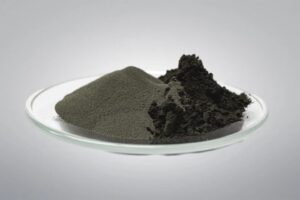




Boron Carbide Rod Bar
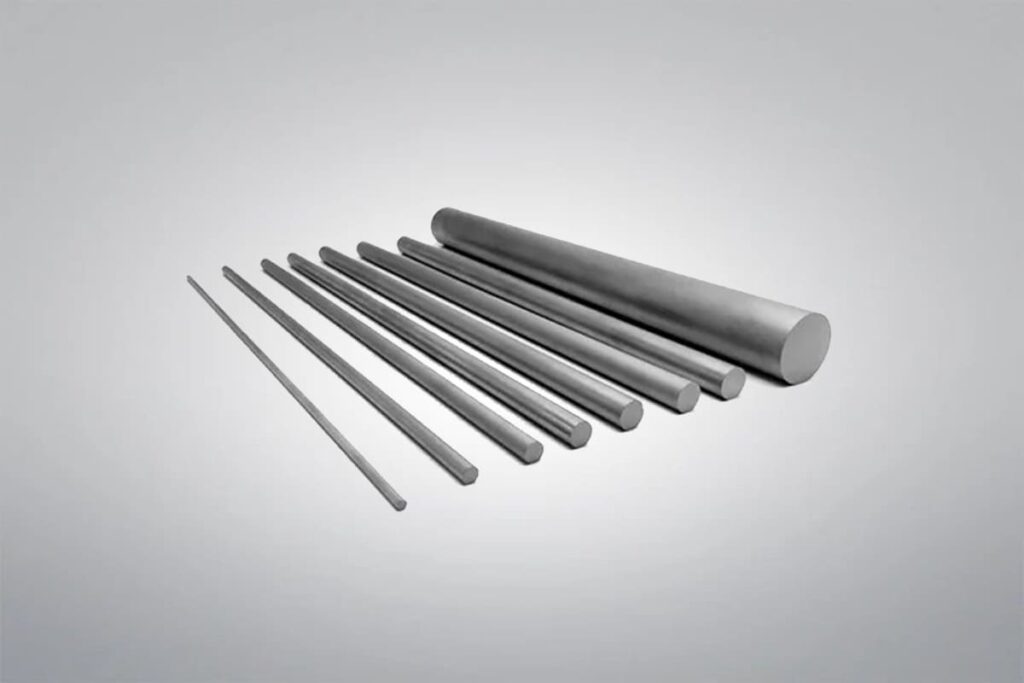
Boron carbide rod/bar data sheet
|
Purity: |
≥99.5% |
|
Appearance: |
Black or gray |
|
Chemical formula: |
B₄C |
|
Density: |
2.46-2.62 g/cm³ |
Boron carbide rod/bar Description
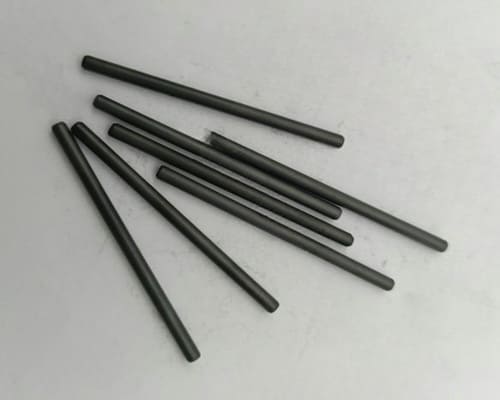
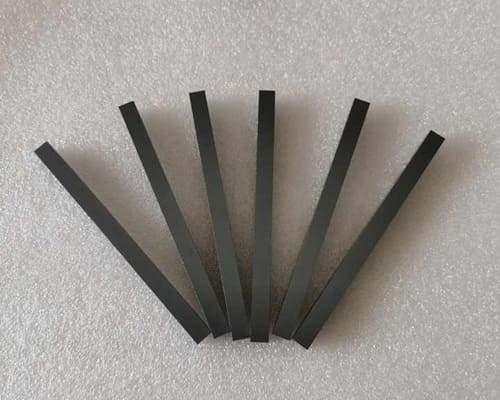
Boron carbide is a ceramic material with exceptional hardness, approaching that of diamond and cubic boron nitride, typically manufactured through sintering processes. Boron carbide rods/bars are produced using advanced processes, offering precise dimensions, stable performance, and customization to meet specific requirements.

Boron carbide rod Boron carbide rod
Advantages of the boron carbide rod/bar
- Low density
- Exceptional hardness
- Excellent wear resistance
- Neutron absorption
Pressure-free sintering process of boron carbide rods/bars
- Raw material preparation : Use high purity boron carbide powder and sintering auxiliaries.
- Powder mixing : Mix the powder and sintering auxiliaries evenly.
- Molding : Giving the powder the desired shape.
- Degassing : Remove volatile components to prevent bubbles or cracks.
- Sintering without pressure : Sintering at 1600-2000°C.
- Refrigeration and inspection : Cool to room temperature and check quality.
Applications of boron carbide rod/bar
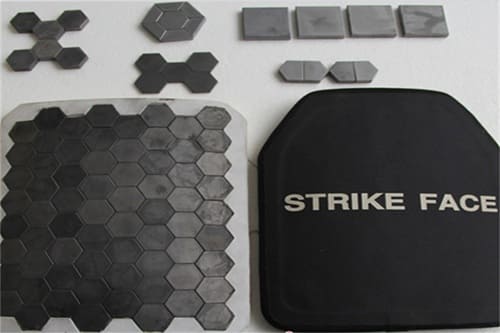
- Ballistic materials : Boron carbide rods are widely used in bulletproof armor and protective equipment due to their extreme hardness, which effectively resists penetration by high-speed projectiles.
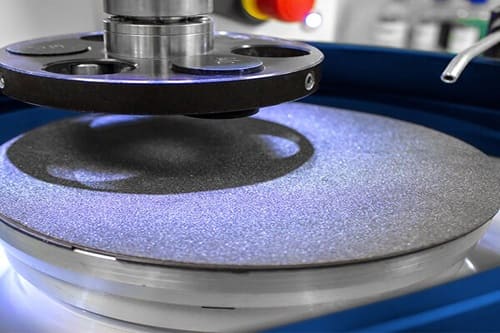
- Abrasives : Thanks to their exceptional hardness and wear resistance, boron carbide rods are used as grinding and cutting tools in the precision machining, polishing, and abrasive industries.
- Nuclear industry : Boron carbide has excellent neutron absorption properties, making it an essential material for use in nuclear reactors as a neutron absorber, improving reactor safety.
- Aerospace : In the aerospace industry, boron carbide rods are used in the manufacture of lightweight, high-strength structural components and thermal protection materials for high-temperature environments.
- High-temperature materials : Boron carbide rods can withstand extreme temperatures, making them suitable for high-temperature processing equipment, ensuring stability under harsh conditions.
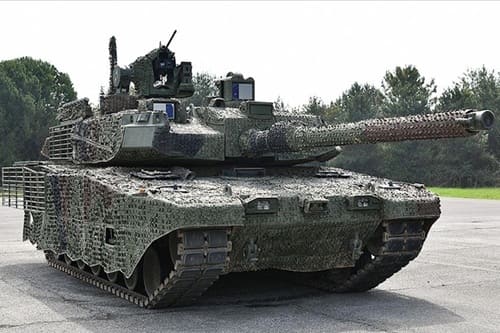
 Bulletproof Plate
- Ceramic Bulletproof plates for millitary aircraft pilot cockpit
- Ceramic Bulletproof plates for tank
- Boron Carbide for grinding

Boron Carbide Material Properties
Boron Carbide Material Grades
Reaction bonded boron carbide (B4C) is primarily used ballistic armor, providing excellent protection while reducing weight as compared to other armor materials.
|
Properties |
Units |
Reaction Bonded |
|
Flexural Strength, MOR (20 °C) |
MPa |
250 |
|
Fracture Toughness, KIc |
MPa m1/2 |
3.0 – 4.0 |
|
Thermal Conductivity (20 °C) |
W/m K |
50 |
|
Coefficient of Thermal Expansion |
1×10⁻⁶/°C |
4.5 |
|
Maximum Use Temperature |
°C |
1000 |
|
Dielectric Strength (6.35mm) |
ac-kV/mm |
— |
|
Dielectric Loss (tan δ) |
1MHz, 25 °C |
— |
|
Volume Resistivity (25°C) |
Ω-cm |
10³ |
Reaction Bonded B4C Advantages:
- High strength
- High hardness
- Cost-effective
- Suitable for large-scale applications
Hot-pressed, also known as pressure assisted densified (PAD), boron carbide is one of the hardest materials available in commercial shapes. This exceptional hardness combined with low density is used in ballistic armor, maximizing protection while minimizing weight.
|
Properties |
Units |
Hot Pressed |
|
Flexural Strength, MOR (20 °C) |
MPa |
320 – 450 |
|
Fracture Toughness, KIc |
MPa m1/2 |
3.0 – 4.0 |
|
Thermal Conductivity (20 °C) |
W/m K |
45 – 100 |
|
Coefficient of Thermal Expansion |
1×10⁻⁶/°C |
4.5 – 4.9 |
|
Maximum Use Temperature |
°C |
2000 |
|
Dielectric Strength (6.35mm) |
ac-kV/mm |
— |
|
Dielectric Loss (tan δ) |
1MHz, 25 °C |
— |
|
Volume Resistivity (25°C) |
Ω-cm |
100 |
Hot Pressed B4C Advantages:
- Higher density
- Better mechanical properties
- Ideal for high-strength, high-temperature engineering materials
Pressureless sintered boron carbide combines high purity and the excellent mechanical properties of boron carbide for use in both ballistic armor and semiconductor manufacturing.
|
Properties |
Units |
Sintered |
|
Flexural Strength, MOR (20 °C) |
MPa |
450 |
|
Fracture Toughness, KIc |
MPa m1/2 |
3.0 – 5.0 |
|
Thermal Conductivity (20 °C) |
W/m K |
43 – 100 |
|
Coefficient of Thermal Expansion |
1×10⁻⁶/°C |
4.5 – 4.9 |
|
Maximum Use Temperature |
°C |
— |
|
Dielectric Strength (6.35mm) |
ac-kV/mm |
— |
|
Dielectric Loss (tan δ) |
1MHz, 25 °C |
— |
|
Volume Resistivity (25°C) |
Ω-cm |
10 |
Pressureless Sintered B4C Advantages:
- High hardness
- Excellent wear resistance
- High chemical stability
- Low density
- Good thermal stability
Boron Carbide Ceramic Machining
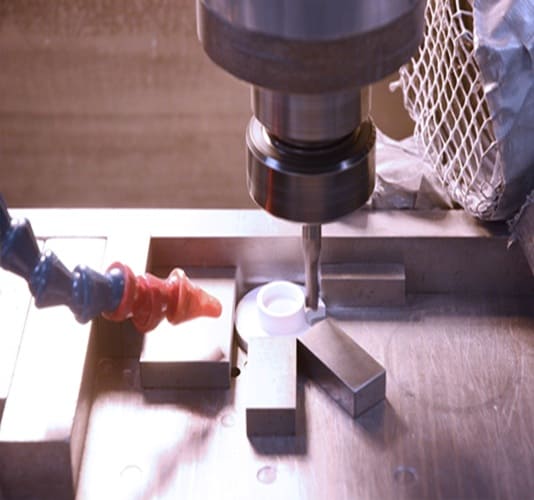
Boron Carbide Ceramic machining is a demanding process used to shape this ultra-hard ceramic into precise components for technical applications. Due to its exceptional hardness and brittleness, machining boron carbide requires specialized tools and careful control to prevent cracking or surface damage. While the material can be shaped more easily in its green or biscuit state, achieving tight tolerances often requires machining after full sintering, which involves diamond-based techniques. The common machining methods include:
- Diamond Cutting: Diamond-coated tools are essential for cutting fully sintered boron carbide, enabling accurate shaping and smooth surface finishes.
- Precision Grinding: Used to achieve fine tolerances and clean finishes. This process is slow and requires careful handling to avoid micro-cracks or structural damage.
- Ultrasonic Machining: Applies high-frequency vibrations with abrasive slurry to remove material gently, suitable for intricate and delicate shapes.
- Laser Cutting: A non-contact technique effective for pre-sintered material or thin sections, offering clean edges with minimal thermal stress.
- Green Machining: Carried out before sintering, allowing easier shaping of complex geometries. However, post-sintering shrinkage (~20%) must be accounted for in final dimensions.
Boron Carbide Ceramic Packaging
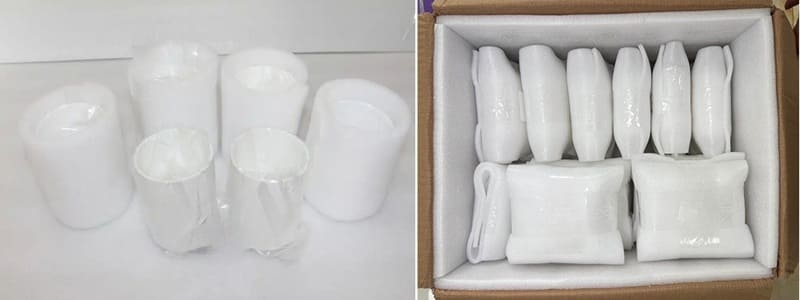
Boron Carbide ceramic products are typically packaged in vacuum-sealed bags to prevent moisture or contamination and wrapped with foam to cushion vibrations and impacts during transport, ensuring the quality of products in their original condition.
Download
Get A Quote
We will check and get back to you in 24 hours