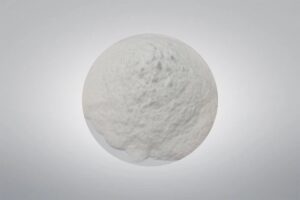




Aluminum Nitride Substrate
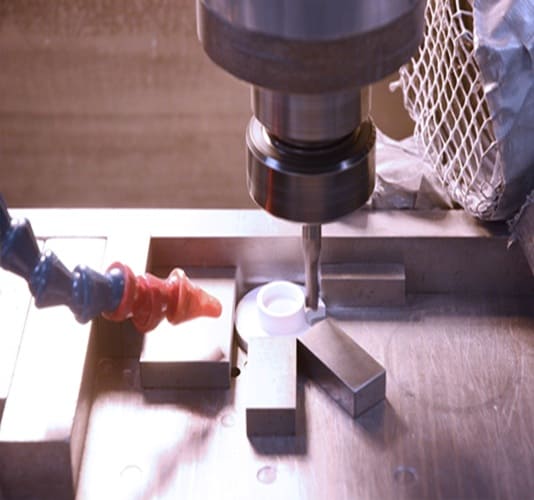
Aluminum nitride substrate data sheet
|
Reference code: |
HM1914 |
|
Purity: |
95%-99% |
|
Density: |
3.32 g/ cm³ |
|
Appearance: |
Dark gray / Light gray / Beige |
|
Dimensions: |
Personalized |
|
Shape: |
Rectangular, round or custom |
|
Surface finish: |
Grinding, polishing or metallizing |
Aluminum nitride substrate
The aluminum nitride (AlN) substrate is made from high-purity aluminum nitride ceramic. It provides effective thermal management in high-temperature environments, along with low dielectric loss and excellent thermal shock resistance. Advanced Ceramics Hub offers custom bulk and one-piece molding options to meet diverse industrial and research requirements, with flexible and rapid customization of product size and scale.
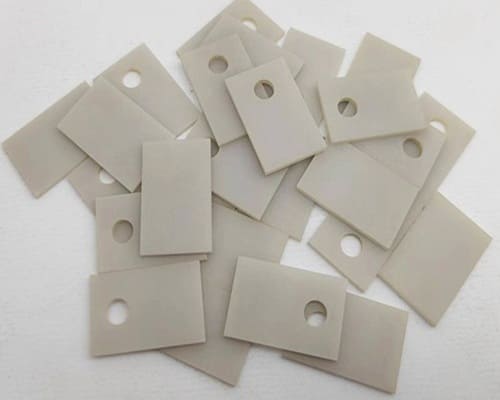
Aluminum nitride substrate with holes 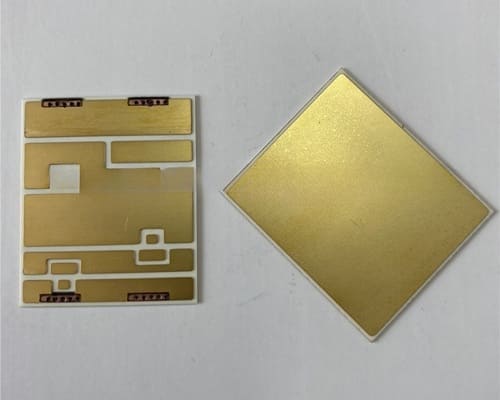
Aluminum nitride substrate with holes
Properties of the aluminum nitride substrate
|
Article |
Unit |
AlN-170 |
AlN-190 |
AlN-200 |
AlN-230 | |
|
Density |
g/ cm³ |
3.3 |
3.3 |
3.28 |
3.3 | |
|
Melting point |
℃ |
2500 |
2500 |
— |
— | |
|
Surface roughness |
μm |
0.2~0.6 |
0.3~0.5 |
0.2~0.5 |
0.2~0.6 | |
|
Thermal |
Thermal conductivity |
25℃ W/(mk) |
170-190 |
190-210 |
204 |
233 |
|
Coefficient of thermal expansion |
20~300℃ (10 -6 /℃) |
4.6 |
4.6 |
4.0-5.0 |
4.0-5.0 | |
|
Electric |
Dielectric constant |
1 MHz, 25℃ |
8.56 |
8.56 |
— |
— |
|
Dielectric loss |
1 MHz, 25℃ |
4.6×10⁻⁴ |
4.6×10 -4 |
— |
— | |
|
Volume resistivity |
20℃.Ω.cm |
1.4×10 14 |
1.4×10 14 |
>10 14 |
>10 14 | |
|
Dielectric strength |
KV/mm |
≥15 |
≥15 |
>20 |
>20 | |
|
Mechanics |
Flexural strength |
MPA |
300-400 |
300-400 |
350 |
300 |
|
Elastic modulus |
GPa |
310-320 |
310-320 |
— |
— | |
|
Warp |
~/25(length) |
≤3‰ |
≤3‰ |
≤3‰ |
≤3‰ | |
Standard specifications for aluminum nitride substrate
|
Product |
Thickness |
Length and width |
|
Standard 170W product |
0.381 mm |
4×4 inches (101.6×101.6 mm) |
|
0.5 mm | ||
|
0.635 mm | ||
|
1.0 mm | ||
|
1.5 mm | ||
|
170W Non-standard product |
0.1~0.2 mm |
2×2 inches (50.8×50.8 mm) |
|
0.2~0.3 mm |
2×2 inches (50.8×50.8 mm) | |
|
2.0~3.0 mm | ||
|
1.0~3.0 mm |
150 mm, 200 mm, 300 mm | |
|
200W |
(0.3~0.38)±0.01 mm |
4.5×4.5 inches (114.3×114.3 mm) |
|
230W |
(0.3~0.38)±0.01 mm |
4.5×4.5 inches (114.3×114.3 mm) |
Advantages of the aluminum nitride substrate
- More than 7 times the thermal conductivity of alumina.
- The coefficient of thermal expansion is close to that of silicon, which guarantees high reliability for the assembly of large silicon chips and resistance to thermal cycling.
- Excellent electrical insulation with a low dielectric constant.
- Superior mechanical resistance to that of alumina.
- Excellent resistance to corrosion of molten metals.
- Minimal impurity content, non-toxic and high purity.
Applications of aluminum nitride substrate
- Electronics industry : They are used as substrates for high-power electronic devices (e.g., power modules, IGBTs and MOSFETs) because they offer superior heat dissipation and electrical insulation.
- LED Packaging : These are used as substrates for LED chips, taking advantage of their high thermal conductivity to improve heat dissipation and extend the device’s lifespan.
- Microwave and RF : Used in microwave circuits and RF devices as substrates due to their low dielectric loss and high thermal stability.
- Automotive electronics : Applied in power converters and control modules of electric vehicles to improve thermal management and reliability.
- Aerospace : Used in high-temperature, high-reliability electronic systems as substrates to support critical components.
 Thermal Management Techniques
 Electrical and Electronic Area
 automobile industry
 Aerospace
 Medical Area
Aluminum Nitride Material Properties
Grades of aluminum nitride material
HMAN1000 is our standard high purity aluminium nitride with a thermal conductivity of 170 W/mK. This is the same thermal performance as our substrate material but offers the possibility of larger pieces in length/width and in thicknesses up to 30mm.
HMAN1000 has good coefficient of thermal expansion – matched to silicon and gallium nitride over wide temperature ranges.
HMAN100 Applications:
- High power insulators
- Laser components
- Water cooled heatsinks
- Power electronics
- Aerospace, medical and semiconductor components
HMAN1000S 170 W/mK is our standard high thermal conductivity substrate material, However, other high-performance grades are also available.
HMAN1000S Applications:
- Heat sinks
- Heat spreaders
- Laser heatsinks power rectifiers
- Aerospace, power electronics, rectifiers
HMAN2000 is one of our enhanced grades of aluminium nitride, offering all the mechanical performance of HMAN1000 with the enhanced benefits of 200 W/mK thermal conductance.
HMAN2000 Applications:
- Heat sinks
- Heat spreaders
- Laser heatsinks power rectifiers
- Aerospace, power electronics, rectifiers
HMAN3000 is one of our enhanced grades of aluminium nitride offering, all the mechanical performance of HMAN1000 with the enhanced benefits of 230 W/mK thermal conductance.
HMAN3000 Applications:
- Heat sinks
- Heat spreaders
- Laser heatsinks power rectifiers
- Aerospace, power electronics, rectifiers
HMAN4000 is one of our enhanced grades of aluminium nitride offering, all the mechanical performance of HMAN1000 with the enhanced benefits of 200 W/mK thermal conductance.
HMAN4000 Applications:
- Heat sinks
- Heat spreaders
- Laser heatsinks power rectifiers
- Aerospace, power electronics, rectifiers
Machining of aluminum nitride ceramic
Machining aluminum nitride (AlN) ceramics is a precision process used to manufacture high-performance components from aluminum nitride materials. Machining aluminum nitride ceramics requires specialized equipment and techniques to address their brittleness and hardness. Proper tooling and controlled environments are essential to prevent material damage and achieve the desired surface finish and dimensional accuracy. Common machining methods include:
- Diamond cutting: Diamond tools are used to achieve fine precision and smooth surface finishes, ideal for complex shapes.
- Laser cutting: A non-contact method used for intricate shapes, with high precision and minimal thermal impact.
- Precision grinding: Used to achieve fine tolerances and surface finishes. Requires special care to prevent cracking or chipping due to the fragility of ceramics.
- Wire electrical discharge machining (EDM): A method often used for intricate cuts, especially for fine and complex geometries.
Aluminum Nitride Ceramic Packaging
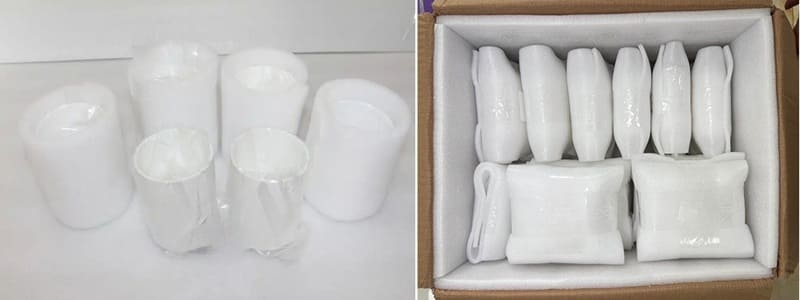
Aluminum Nitride Ceramic products are typically packaged in vacuum-sealed bags to prevent moisture or contamination and wrapped with foam to cushion vibrations and impacts during transport, ensuring the quality of products in their original condition.
Download
Get A Quote
We will check and get back to you in 24 hours