




What Impact Does the Thickness of Graphene Sheets Have on Its Properties?
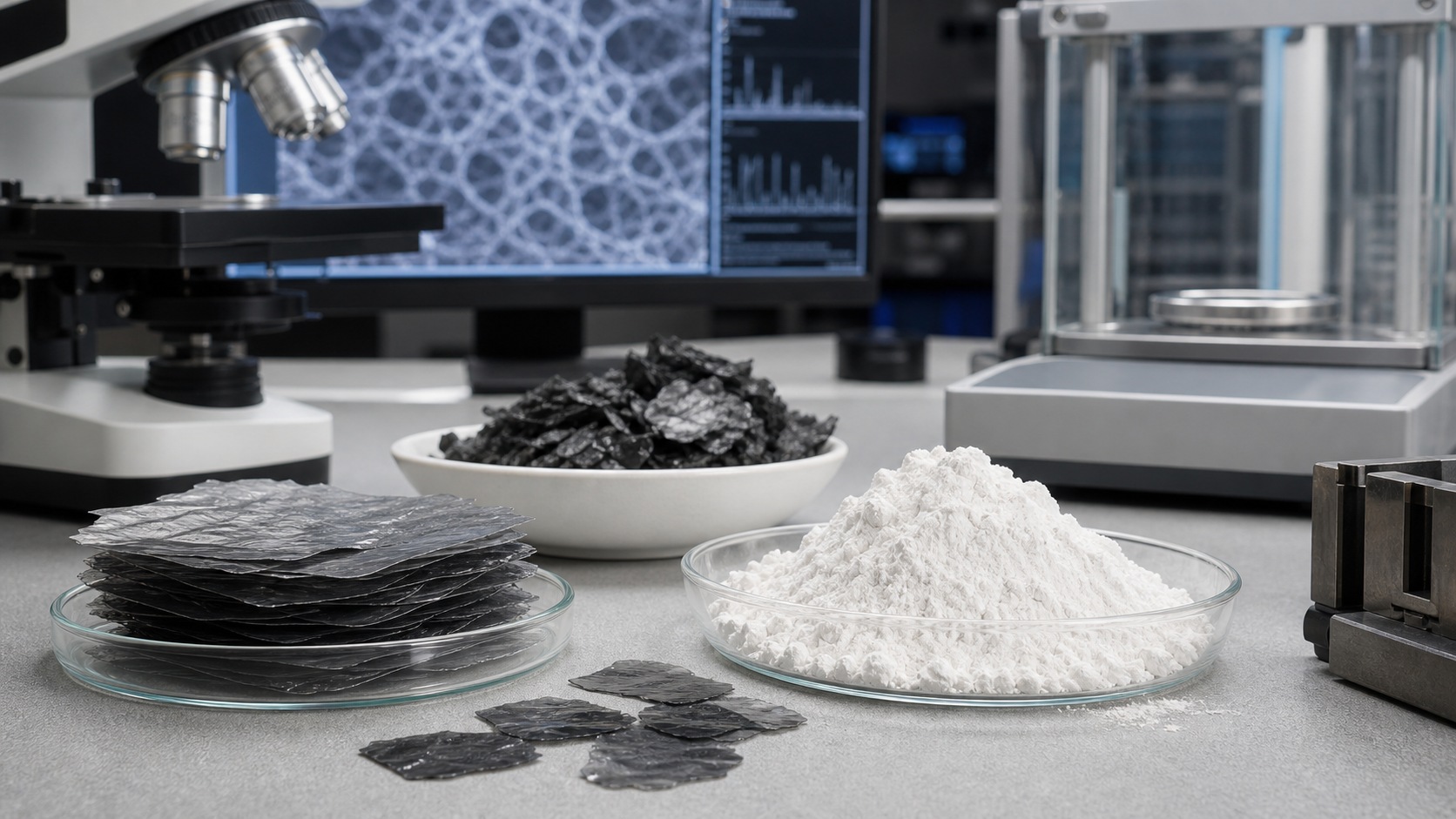
TL;DR: Graphene sheet thickness affects surface area, conductivity path, stacking behavior, and how easily graphene disperses in a matrix. Thin sheets expose more surface and can be more active, while thicker stacks may be easier to handle but can behave more like graphite fillers. If you are evaluating this material for a real project, prepare the application conditions before requesting a quote.
Graphene sheet thickness changes how graphene behaves in a real material system. A single layer can show very different electrical, thermal, and surface behavior from a stack of many layers. That matters when researchers add graphene to ceramic powders, polymer composites, coatings, or thermal interface materials. The common mistake is to ask for graphene by name only. A better request explains whether the goal is conductivity, heat spreading, reinforcement, barrier behavior, or surface modification. Thickness then becomes one design variable among many, along with lateral size, defects, oxygen content, dispersion route, and matrix compatibility.
At Advanced Ceramics Hub, most useful conversations start with the application, not only the material name. The goal is to match the ceramic to heat, wear, insulation, chemistry, geometry, and inspection needs.
Research and Source Notes
Graphene research is full of strong claims, so buyers should separate ideal sheet behavior from bulk material behavior. Reviews such as published material-property references are useful because they explain why structure, defects, and layer count matter before the material enters a composite.
For sourcing, this means the purchase specification should not stop at the word graphene. It should describe the material form, expected layer range, surface chemistry, and test method. That keeps the discussion tied to the customer’s experiment instead of a generic brochure claim.
Why does graphene sheet thickness matter?
Graphene’s value comes from its two-dimensional structure. As sheets become thicker, the surface-to-volume ratio drops and the material can act less like isolated graphene. For ceramic composites, this can change dispersion, sintering behavior, interfacial bonding, and crack-bridging potential. The effect is application-specific, which is why published material-property references is a useful starting point rather than a final specification.
Single-layer, few-layer, and multilayer graphene are not interchangeable
Single-layer graphene is attractive for fundamental research, sensors, and surface-driven effects. Few-layer graphene can be more practical for composites because it balances performance and handling. Multilayer graphene and nanoplatelets often suit bulk filler use, but the buyer should not expect the same behavior as isolated sheets.
| Review area | Why it matters | What to confirm |
|---|---|---|
| Single-layer | High surface activity and research use | Harder to disperse and verify at scale |
| Few-layer | Balanced option for composite screening | Layer count distribution must be stated |
| Multilayer | Bulk filler and cost-sensitive trials | May act more like graphite if heavily stacked |
How thickness changes ceramic composite design
In a ceramic matrix, graphene can affect green body packing, sintering, thermal pathways, and fracture behavior. Too much stacking can reduce the contact area with the ceramic powder. Poor dispersion can also create weak zones instead of reinforcement. For powder-based projects, share the ceramic chemistry, forming route, and firing atmosphere.
What buyers should specify
A useful inquiry should include target layer count, lateral size, purity, oxygen content, matrix material, dispersion method, and final property goal. If the project is exploratory, state the test method and the comparison material. This helps avoid ordering a graphene grade that looks impressive but cannot be processed in the target system.
Related product pages such as alumina tubes, alumina plates, zirconia ceramic crucibles, and boron nitride crucibles can help narrow the discussion when geometry or operating conditions are already known.
Best-fit applications
Graphene sheet thickness is most important in conductive composites, barrier coatings, thermal interface materials, sensors, and research ceramics. If the end use is structural reinforcement, the interface and dispersion quality can matter more than the theoretical property of a perfect sheet.
A Practical Decision Workflow
Start by defining the property target. If the customer needs conductivity, the key questions are sheet contact, dispersion, and percolation. If the customer needs reinforcement, the key questions are interface bonding and crack path. If the customer needs thermal performance, the key questions are orientation and contact resistance.
Next, choose a small test matrix. Compare one thin-sheet grade, one few-layer grade, and one practical multilayer filler. Keep the loading level and mixing route consistent. This workflow gives the research team a clearer answer than ordering one expensive graphene grade and hoping it solves every problem.
What Not to Assume
Do not assume thinner is always better. Very thin graphene may be difficult to disperse or verify in bulk use. Do not assume a high theoretical property will transfer into a ceramic or polymer matrix without interface control.
RFQ Checklist for This Topic
For graphene sheet thickness projects, a strong RFQ should focus on the customer pain point behind the search. Send details that explain what must improve, what failed before, and how the part will be tested.
- Target property: electrical conductivity, thermal pathway, barrier effect, or reinforcement.
- Preferred form: powder, dispersion, slurry, film, nanoplatelet, or custom composite filler.
- Matrix material, mixing method, solvent or resin system, and any surfactant limits.
- Required layer count range, lateral size range, purity, packaging, and test method.
How to Validate the Choice Before Production
Graphene trials should start with a small matrix study, not a single sample. Compare at least two layer-count ranges and one control material. Keep the mixing method, solids loading, and curing or sintering route the same, or the result will be hard to interpret.
For ceramic composites, check dispersion before judging performance. Agglomerated graphene can create weak points and misleading test results. A simple validation plan should include microscopy, electrical or thermal testing, and a repeat batch to see whether the process is stable.
Supplier Review Notes
Ask whether the supplier can describe layer-count distribution, surface chemistry, and recommended dispersion route. For research users, documentation and repeatability may matter more than a broad marketing claim.
If the graphene will be used with ceramic powder, ask how it should be mixed and stored. Handling can change dispersion, and dispersion often decides whether the material improves or weakens the final composite.
| Question to ask | Why it matters | Useful evidence |
|---|---|---|
| Can the supplier explain the grade choice? | Prevents generic material substitution | Grade notes, datasheet, or application reasoning |
| Can the geometry be made reliably? | Avoids parts that are technically possible but risky | Machining review, tolerance review, or sample history |
| What inspection will be used? | Connects the quote to acceptance criteria | Dimensional check, visual inspection, density, purity, or electrical test |
Final Engineering Notes Before Sourcing
For graphene-related sourcing, keep the first order small and test-focused. The goal is to learn which sheet structure works in the real matrix. Ask for documentation that matches the experiment, then scale only after dispersion, repeatability, and target performance are confirmed.
Before publishing the specification internally, separate confirmed requirements from assumptions. Confirmed requirements include dimensions, operating conditions, quantity, and inspection needs. Assumptions include expected lifetime, substitute materials, and untested process changes. This simple separation helps the supplier respond with fewer guesses and helps the buyer compare quotes more fairly.
Conclusion
What Impact Does the Thickness of Graphene Sheets Have on Its Properties? is best treated as a material-selection problem, not a simple definition. Start with the failure mode, compare the ceramic against the process, and check whether the shape can be made reliably. For help with a specific drawing or research requirement, contact our team with the working conditions and target quantity.
Frequently Asked Questions
What is the most important point about graphene sheet thickness?
Graphene sheet thickness affects surface area, conductivity path, stacking behavior, and how easily graphene disperses in a matrix. Thin sheets expose more surface and can be more active, while thicker stacks may be easier to handle but can behave more like graphite fillers.
How should I specify graphene sheet thickness for a quote?
Share the drawing, dimensions, tolerance, temperature, atmosphere, load, chemistry, quantity, and the property you need to improve.
Can one ceramic material replace another?
Sometimes, but it should be reviewed carefully. Similar-looking ceramics can differ in toughness, thermal shock resistance, dielectric behavior, machinability, and contamination risk.
Do I need a custom part or a standard product?
Use a standard product when size and material already match the process. Choose a custom part when geometry, tolerance, purity, or operating conditions are specific.
When should I contact Advanced Ceramics Hub?
Contact the team when heat, wear, electrical insulation, thermal cycling, or contamination requirements overlap. Early review can prevent costly redesign later.