




Surface Modification of Alumina Spherical Powder for Enhanced Thermal Conductivity
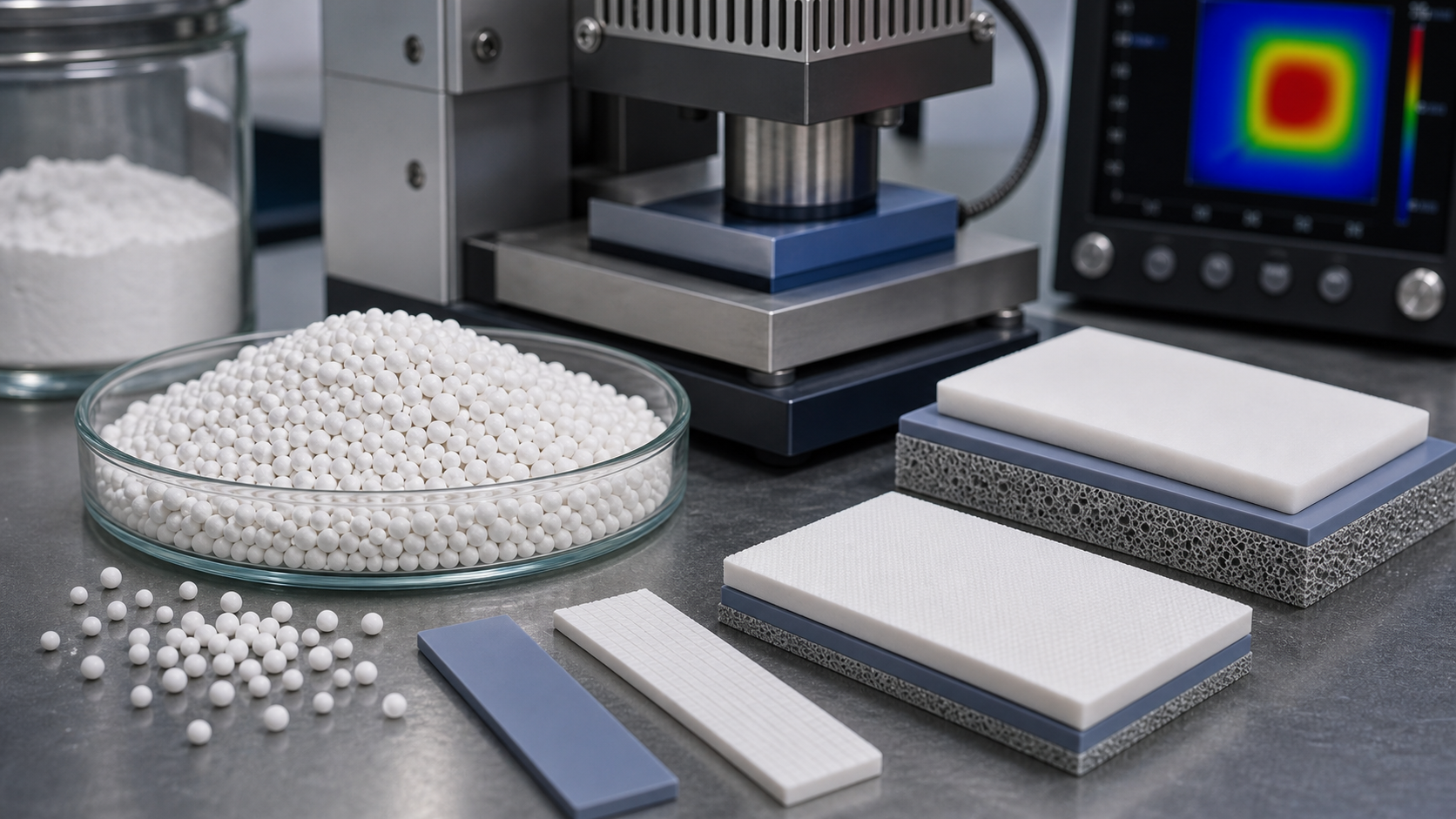
TL;DR: Alumina ceramic is a practical baseline when a part needs electrical insulation, hardness, chemical stability, and high-temperature resistance. The final grade still depends on purity, porosity, geometry, atmosphere, and the way the part is formed and fired. If you are evaluating this material for a real project, prepare the application conditions before requesting a quote.
Surface Modification of Alumina Spherical Powder for Enhanced Thermal Conductivity is a practical question for engineers who need a dependable ceramic without overcomplicating the design. Alumina is widely used because it balances insulation, hardness, heat resistance, and cost. But alumina is not one single material. Purity, grain size, porosity, surface finish, and firing route can change performance. This guide focuses on the selection problem behind the title, not only the material name. It helps buyers prepare better drawings, ask better questions, and avoid choosing a grade that cannot meet the real operating conditions.
At Advanced Ceramics Hub, most useful conversations start with the application, not only the material name. The goal is to match the ceramic to heat, wear, insulation, chemistry, geometry, and inspection needs.
Research and Source Notes
Alumina property references such as published material-property references show why aluminum oxide ceramic is a common baseline material. It combines insulation, hardness, and heat resistance in a form that is practical for many industrial parts.
The important sourcing point is grade control. Alumina purity, density, porosity, and forming route can change the part’s behavior. A strong article should therefore explain both the property and the procurement question behind it.
What should engineers know first about surface modification of alumina spherical powder?
Alumina ceramic is a practical baseline when a part needs electrical insulation, hardness, chemical stability, and high-temperature resistance. The final grade still depends on purity, porosity, geometry, atmosphere, and the way the part is formed and fired. A good review starts with the service environment, not the catalog name. Use the title topic to define the failure mode, then compare materials by risk and manufacturability.
The property that matters most depends on the failure mode
For heat problems, review maximum temperature, thermal cycling, and atmosphere. For wear problems, review hardness, toughness, mating material, and surface finish. For electronic or research use, purity and contamination can be just as important as strength.
| Review area | Why it matters | What to confirm |
|---|---|---|
| Temperature | Peak and working temperature | Thermal cycling and atmosphere |
| Mechanical stress | Wear, bending, impact, compression | Mating material and surface finish |
| Purity | Research, electronics, or clean processing | Contamination limits and packaging |
Material grade and processing change the result
Two parts with the same chemical family can behave differently if purity, density, porosity, grain size, or firing route changes. That is why datasheets help, but drawings and process conditions are still needed.
Application examples and selection logic
Use the material when its main advantage solves the real problem. Avoid it when another ceramic gives the same result with lower risk, lower cost, or easier manufacturing. Internal pages such as alumina custom parts, boron nitride crucibles, and silicon nitride crucibles can help compare nearby options.
Related product pages such as alumina tubes, alumina plates, zirconia ceramic crucibles, and boron nitride crucibles can help narrow the discussion when geometry or operating conditions are already known.
What to send before requesting a quote
The best RFQ explains what the part must survive. Include a drawing, dimensions, tolerance, atmosphere, temperature, load, chemistry, electrical need, quantity, and current failure mode.
A Practical Decision Workflow
Start with the interface problem. If a ceramic filler does not disperse, bonds poorly, or lowers composite reliability, surface treatment may help. The treatment must match the resin or polymer system.
Then validate processing. Coupling chemistry can look good in a small beaker and still fail in production mixing. The workflow should include treated and untreated controls, viscosity checks, thermal tests, and mechanical tests.
What Not to Assume
Do not assume one coupling agent works for every powder and resin. Surface chemistry must match the composite system. Treated powder should be tested in the final formulation.
RFQ Checklist for This Topic
For surface modification of alumina spherical powder projects, a strong RFQ should focus on the customer pain point behind the search. Send details that explain what must improve, what failed before, and how the part will be tested.
- Drawing, dimensions, tolerances, and surface finish.
- Operating temperature, atmosphere, hold time, and thermal cycling conditions.
- Mechanical load, wear mode, contact material, and current failure mode.
- Purity, contamination limits, cleaning method, quantity, and inspection requirements.
How to Validate the Choice Before Production
Surface modification should be validated inside the final resin or composite, not only by treating powder. A silane that looks good in one polymer system may not bond well in another.
Measure dispersion, viscosity, sedimentation, mechanical strength, and thermal performance after processing. If the goal is thermal conductivity, keep filler loading and curing conditions consistent across comparison samples.
Supplier Review Notes
For alumina, ask about purity, density, forming method, and inspection. A simple material name such as alumina can cover many grades and performance levels.
The supplier should help choose between tubes, plates, rods, boats, substrates, powders, or custom parts. Matching the product form to the application is often the fastest way to reduce risk.
| Question to ask | Why it matters | Useful evidence |
|---|---|---|
| Can the supplier explain the grade choice? | Prevents generic material substitution | Grade notes, datasheet, or application reasoning |
| Can the geometry be made reliably? | Avoids parts that are technically possible but risky | Machining review, tolerance review, or sample history |
| What inspection will be used? | Connects the quote to acceptance criteria | Dimensional check, visual inspection, density, purity, or electrical test |
Final Engineering Notes Before Sourcing
For surface-modified powder sourcing, ask for samples that match the actual resin or composite system. A treatment should be judged by dispersion, interface performance, and processing stability, not by surface chemistry claims alone.
Before publishing the specification internally, separate confirmed requirements from assumptions. Confirmed requirements include dimensions, operating conditions, quantity, and inspection needs. Assumptions include expected lifetime, substitute materials, and untested process changes. This simple separation helps the supplier respond with fewer guesses and helps the buyer compare quotes more fairly.
Conclusion
Surface Modification of Alumina Spherical Powder for Enhanced Thermal Conductivity is best treated as a material-selection problem, not a simple definition. Start with the failure mode, compare the ceramic against the process, and check whether the shape can be made reliably. For help with a specific drawing or research requirement, contact our team with the working conditions and target quantity.
Frequently Asked Questions
What is the most important point about surface modification of alumina spherical powder?
Alumina ceramic is a practical baseline when a part needs electrical insulation, hardness, chemical stability, and high-temperature resistance. The final grade still depends on purity, porosity, geometry, atmosphere, and the way the part is formed and fired.
How should I specify surface modification of alumina spherical powder for a quote?
Share the drawing, dimensions, tolerance, temperature, atmosphere, load, chemistry, quantity, and the property you need to improve.
Can one ceramic material replace another?
Sometimes, but it should be reviewed carefully. Similar-looking ceramics can differ in toughness, thermal shock resistance, dielectric behavior, machinability, and contamination risk.
Do I need a custom part or a standard product?
Use a standard product when size and material already match the process. Choose a custom part when geometry, tolerance, purity, or operating conditions are specific.
When should I contact Advanced Ceramics Hub?
Contact the team when heat, wear, electrical insulation, thermal cycling, or contamination requirements overlap. Early review can prevent costly redesign later.