




Silicon Nitride Substrates: The Future Of High Thermal Conductivity Materials
As the electronics industry moves toward higher power densities, faster switching speeds, and more compact designs, the role of substrate materials has become increasingly important. Among the available options, silicon nitride substrates have emerged as a leading solution for high-performance applications, combining excellent thermal conductivity with exceptional mechanical strength. These substrates are particularly well-suited for next-generation SiC (silicon carbide) power devices, where heat dissipation and reliability are critical factors.
Silicon nitride (Si3N4) is not only capable of transferring heat efficiently but also withstands mechanical stress, vibration, and harsh environmental conditions better than many other ceramics. In this article, we will explore what silicon nitride substrates are, why they are important, how they compare to other materials, and what the future holds for this advanced ceramic technology.
At Advanced Ceramic Hub, we specialize in high-quality silicon nitride products, ensuring optimal performance for industrial and scientific applications.
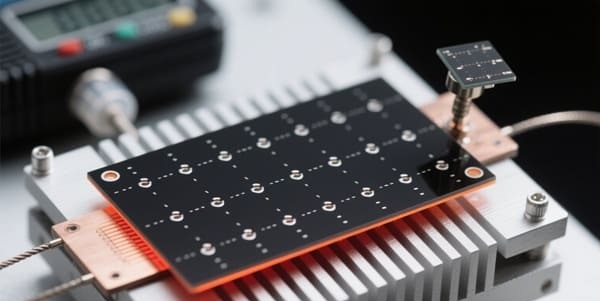
What is a Silicon Nitride Substrate and How is it Manufactured?
A silicon nitride substrate is a ceramic base plate made from Si3N4 powder, sintered under high temperature and pressure to achieve a dense, uniform structure. Its manufacturing process often involves gas pressure sintering or hot pressing to ensure low porosity, high strength, and consistent thermal performance.
These substrates are particularly valued in high-power electronics for their ability to handle high temperatures without warping or losing structural integrity. Their low coefficient of thermal expansion (CTE) allows them to match closely with SiC devices, reducing thermal stress during operation.
Key Physical and Thermal Properties of Silicon Nitride Substrates:
| Property | Typical Value | Benefit |
| Thermal Conductivity | 80–90 W/m·K | Effective heat dissipation |
| Flexural Strength | > 800 MPa | Superior mechanical durability |
| Fracture Toughness | 6–8 MPa·m^1/2 | High crack resistance |
| CTE | ~3 ppm/°C | Thermal expansion of SiC |
| Dielectric Strength | > 15 kV/mm | Reliable electrical insulation |
By combining high conductivity with mechanical resilience, silicon nitride substrates are a balanced choice for applications where both heat and structural load are significant concerns.
Explore our high-quality silicon nitride products.
Why is High Thermal Conductivity Critical for Silicon Nitride Substrates?
High thermal conductivity directly impacts the performance and longevity of electronic devices. In high-power modules, such as inverters for electric vehicles, excessive heat can lead to component degradation and eventual failure. Silicon nitride substrates solve this problem by transferring heat away from the semiconductor junction quickly and evenly.
Unlike some high-conductivity ceramics that sacrifice mechanical strength, silicon nitride maintains structural stability even at elevated temperatures, ensuring long-term reliability.
Benefits of High Thermal Conductivity in Silicon Nitride Substrates:
- Reduces thermal resistance for faster heat removal.
- Minimizes the risk of overheating in power modules.
- Allows higher power density designs without thermal penalties.
- Improves device efficiency and performance stability.
- Extends service life by preventing heat-induced failures.
This combination of heat transfer and strength makes silicon nitride particularly important in industries where equipment downtime is costly.
How Do Silicon Nitride Substrates Compare to Other Ceramic Materials?
Choosing a substrate material often involves balancing conductivity, mechanical strength, and cost. While some ceramics excel in one property, they may fall short in others. For example, alumina is inexpensive but thermally limited, while aluminum nitride is conductive but mechanically weaker. Beryllium oxide has high thermal performance but is toxic to handle.
Comparison of Common Ceramic Substrates:
| Material | Thermal Conductivity (W/m·K) | Flexural Strength (MPa) | Advantages | Limitations |
| Silicon Nitride (Si3N4) | 80–90 | > 800 | Balanced strength & conductivity, reliable | Higher cost than Al2O3 |
| Alumina (Al2O3) | 20–30 | ~350 | Low cost, mature tech | Low thermal performance |
| Aluminum Nitride (AlN) | 150–180 | ~300 | High thermal conductivity | Brittle, lower toughness |
| Beryllium Oxide (BeO) | 200–250 | ~300 | Excellent heat conduction | Toxic, handling restrictions |
| Silicon Carbide (SiC) | 120–200 | ~400 | High temp stability | Expensive, brittle |
From this comparison, silicon nitride stands out as the best all-rounder, especially for high-reliability and safety-critical environments.
Request a custom quote for silicon nitride products.
What Mechanical Advantages Make Silicon Nitride Substrates Unique?
Mechanical performance is often overlooked in thermal management discussions, but in real-world applications—especially in transportation and industrial systems—substrates face vibration, mechanical shocks, and thermal cycling. Silicon nitride offers superior fracture toughness and bending strength, making it resistant to cracking under stress.
- Mechanical Benefits of Silicon Nitride Substrates
- Withstands vibration and shock without microcracking.
- Supports thicker copper metallization for higher currents.
- Maintains structural stability during high-temp soldering.
- Resists thermal shock from rapid temperature changes.
- Offers long-term durability in demanding environments.
This mechanical reliability is one reason why silicon nitride substrates are widely used in electric vehicles and rail traction systems.
What Are the Main Applications of Silicon Nitride Substrates?
Silicon nitride substrates have become essential in various industries where high performance and reliability are required. From renewable energy to aerospace, these substrates enable stable operation under extreme conditions.
Key Industry Applications:
| Industry | Application | Advantage of Si3N4 |
| Electric Vehicles | Inverter modules, DC-DC converters | Efficient cooling & mechanical stability |
| Renewable Energy | Wind turbine power electronics | Prolonged service life |
| Rail Transport | High-power traction systems | Vibration resistance |
| Aerospace | Flight control electronics | Lightweight with high durability |
| 5G Networks | Base station RF modules | Stable thermal performance |
Their growing adoption is tied to the global push for energy efficiency and miniaturization in high-tech devices.
How Do Silicon Nitride Substrates Improve Reliability in Harsh Conditions?
In harsh operating environments, materials are exposed to mechanical stress, wide temperature fluctuations, and potential chemical exposure. Silicon nitride’s low CTE and high toughness minimize thermal fatigue, while its chemical stability ensures corrosion resistance.
Reliability Features:
- Strong resistance to thermal cycling degradation.
- Maintains integrity under high vibration.
- Compatible with lead-free soldering processes.
- Corrosion and oxidation resistance.
- Performs consistently in extreme climates.
This resilience explains their popularity in electric mobility, wind energy, and high-reliability industrial electronics.
What Are the Future Developments for Silicon Nitride Substrate Technology?
The next generation of silicon nitride substrates will aim for even higher thermal conductivity, cost-effective production methods, and integrated metallization solutions for improved current capacity.
Emerging Trends:
| Trend | Description | Potential Impact |
| Ultra-high conductivity grades | >100 W/m·K | Enhanced cooling for compact designs |
| Cost reduction processes | Lower sintering temperatures | Wider adoption |
| Advanced copper bonding | Supports higher current loads | Increased module capacity |
| Hybrid substrate designs | Si3N4 with metal reinforcement | Higher structural stability |
| Eco-friendly production | Reduced energy use & emissions | Sustainable manufacturing |
These advancements will make silicon nitride an even stronger contender against competing materials in the thermal management market.
FAQ
| Question | Answer |
| What is the typical operating temperature range? | -55°C to +800°C depending on application. |
| Are silicon nitride substrates safe to handle? | Yes, they are non-toxic and environmentally safe. |
| Can they replace AlN in most applications? | Yes, especially when mechanical strength is important. |
| What thicknesses are available? | Commonly 0.25–1.0 mm, with custom sizes possible. |
| Do they work well with SiC devices? | Yes, due to matched thermal expansion and high heat transfer. |
Conclusion
Silicon nitride substrates represent a powerful combination of thermal conductivity, mechanical durability, and environmental stability. Their ability to manage heat efficiently while withstanding mechanical stress makes them a leading choice for power electronics in electric vehicles, renewable energy systems, aerospace, and telecommunications.
As production technologies advance and costs decrease, these substrates are poised to take an even larger share of the high-performance materials market. For industries demanding high reliability, performance stability, and long operational life, silicon nitride substrates truly are the future of high thermal conductivity materials.
Looking for high-quality silicon nitride products? Contact us today!