




Benefits of Macor Ceramic in High-Temperature Environments
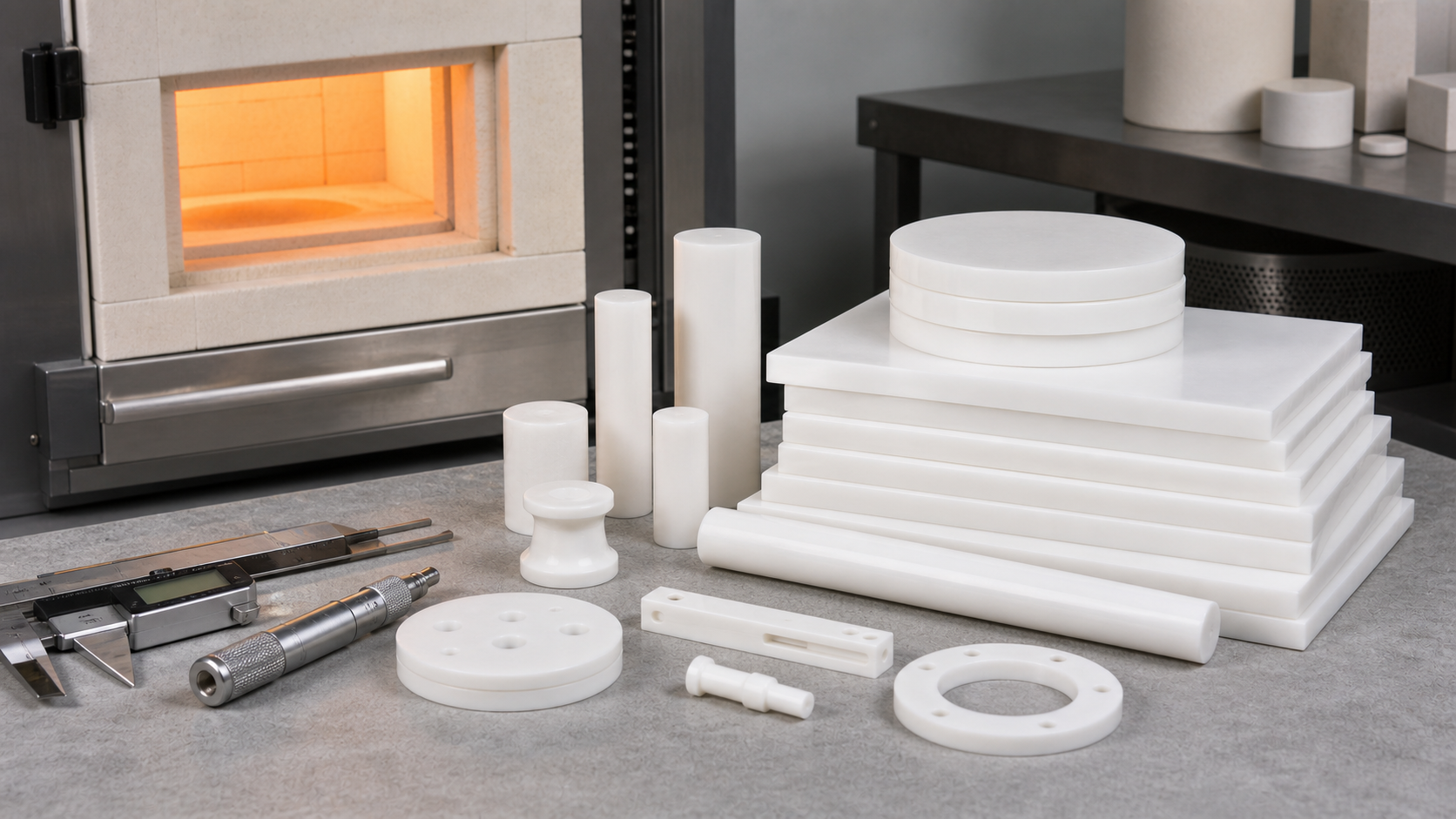
TL;DR: Macor ceramic is useful in high-temperature environments when a part needs electrical insulation, dimensional precision, and fast machining. It is especially valuable for prototypes and complex shapes, but it should be checked against load, thermal cycling, and maximum temperature. If you are evaluating this material for a real project, prepare the application conditions before requesting a quote.
Macor ceramic is often chosen when a team needs a precise insulating part quickly. It is a machinable glass ceramic, which means it can be shaped with conventional machining methods in many designs. That makes it useful for prototypes, fixtures, holders, spacers, and instrument parts. The key is to avoid treating Macor as a universal high-temperature ceramic. It has clear strengths, but it also has limits in heavy load, severe thermal shock, and very high-temperature service. A good Macor review starts with the drawing and the real furnace or instrument conditions.
At Advanced Ceramics Hub, most useful conversations start with the application, not only the material name. The goal is to match the ceramic to heat, wear, insulation, chemistry, geometry, and inspection needs.
Research and Source Notes
Macor is unusual because it sits between conventional machining practice and technical ceramic performance. Supplier data, such as published material-property references helps frame its temperature and machining use, but the final decision still depends on geometry and load.
For researchers, Macor is often useful when the design is changing quickly. It can support fast fixture iterations, test holders, and insulating parts. The same advantage can become a risk if the team later assumes it should replace every high-temperature ceramic.
Why do engineers choose Macor ceramic?
Engineers choose Macor when alumina or zirconia would take longer to machine or require more expensive grinding. Macor can be a practical bridge between a design idea and a working ceramic fixture. Corning’s published material-property references show why it is commonly discussed for machinable insulating components.
Where Macor performs well
Macor works well for electrical insulators, vacuum-compatible fixtures, small holders, nozzles, spacers, and prototype plates. It is helpful when the design has holes, slots, or shapes that would be difficult to make in a fully fired ceramic.
| Review area | Why it matters | What to confirm |
|---|---|---|
| Prototype fixture | Macor can shorten development time | Confirm temperature, mounting, and load |
| Electrical insulator | Good fit for precision insulating shapes | Check creepage distance and surface finish |
| Wear part | Usually not the first choice | Review zirconia, alumina, or SiC instead |
Where Macor needs review
Macor is not the default answer for abrasive wear, heavy structural load, or extreme thermal shock. If the part must survive sliding contact or repeated impact, zirconia, alumina, or silicon carbide may be a better starting point.
Macor vs alumina in sourcing decisions
Macor is often faster to machine, while alumina usually offers stronger baseline ceramic performance and better cost at scale. For common fired shapes, review alumina custom parts. For prototype geometry, Macor may reduce early design friction.
Related product pages such as alumina tubes, alumina plates, zirconia ceramic crucibles, and boron nitride crucibles can help narrow the discussion when geometry or operating conditions are already known.
How to avoid a failed Macor part
Give the supplier the full heat cycle, load condition, and drawing. Thin sections, sharp corners, and screw holes can create stress. If the part sees fast heating or cooling, ask for a thermal cycling review before production.
A Practical Decision Workflow
Start with manufacturability. Macor is valuable because it can be machined into precise shapes, so the drawing should be reviewed before the material is judged. Holes, slots, threads, and thin walls should be checked against machining and handling risk.
Then review temperature and load. Macor can be a strong prototype or instrument material, but the part still needs enough wall thickness and support. If the final design will see wear, impact, or severe thermal shock, compare Macor with alumina or zirconia before ordering.
What Not to Assume
Do not assume Macor should replace every fired ceramic. Its value is machinability and precision, not maximum wear resistance. Do not assume a successful room-temperature fit means the part will survive clamping and heat.
RFQ Checklist for This Topic
For Macor ceramic projects, a strong RFQ should focus on the customer pain point behind the search. Send details that explain what must be improved, what failed before, and how the part will be tested.
- Drawing with holes, slots, wall thickness, and tolerance requirements.
- Maximum temperature, working temperature, hold time, and heating or cooling rate.
- Whether the part is a prototype, test fixture, replacement part, or production component.
- Mechanical load, mounting method, electrical insulation needs, and surface finish target.
How to Validate the Choice Before Production
Macor validation should focus on the real geometry. A flat coupon may pass a heat test, while a part with holes, slots, and thin walls cracks during installation. Test the machined shape if the part has stress-sensitive details.
If the part will be used as a fixture, run a short thermal cycle before ordering a larger batch. Check screw contact, clamping load, and edge condition after cooling. This is especially important for prototype tools that will be handled often.
Supplier Review Notes
For Macor, supplier quality is tied to machining discipline. Ask about tolerance capability, edge finishing, inspection, and whether the quoted part is practical for the required holes and thin sections.
A strong supplier will ask about heat cycle and mounting, not only dimensions. That extra review can prevent cracked fixtures and parts that fit the drawing but fail in use.
| Question to ask | Why it matters | Useful evidence |
|---|---|---|
| Can the supplier explain the grade choice? | Prevents generic material substitution | Grade notes, datasheet, or application reasoning |
| Can the geometry be made reliably? | Avoids parts that are technically possible but risky | Machining review, tolerance review, or sample history |
| What inspection will be used? | Connects the quote to acceptance criteria | Dimensional check, visual inspection, density, purity, or electrical test |
Final Engineering Notes Before Sourcing
For Macor sourcing, treat the first part as both a component and a manufacturability test. Review edge quality, hole condition, fit, and thermal-cycle behavior before using the same drawing for a larger batch. This keeps a fast prototype from becoming an expensive repeat problem.
Before publishing the specification internally, separate confirmed requirements from assumptions. Confirmed requirements include dimensions, operating conditions, quantity, and inspection needs. Assumptions include expected lifetime, substitute materials, and untested process changes. This simple separation helps the supplier respond with fewer guesses and helps the buyer compare quotes more fairly.
Conclusion
The benefits of Macor Ceramic in high-temperature environments are best treated as a material-selection problem, not a simple definition. Start with the failure mode, compare the ceramic against the process, and check whether the shape can be made reliably. For help with a specific drawing or research requirement, contact our team with the working conditions and target quantity.
Frequently Asked Questions
What is the most important point about Macor ceramic?
Macor ceramic is useful in high-temperature environments when a part needs electrical insulation, dimensional precision, and fast machining. It is especially valuable for prototypes and complex shapes, but it should be checked against load, thermal cycling, and maximum temperature.
How should I specify Macor ceramic for a quote?
Share the drawing, dimensions, tolerance, temperature, atmosphere, load, chemistry, quantity, and the property you need to improve.
Can one ceramic material replace another?
Sometimes, but it should be reviewed carefully. Similar-looking ceramics can differ in toughness, thermal shock resistance, dielectric behavior, machinability, and contamination risk.
Do I need a custom part or a standard product?
Use a standard product when the size and material already match the process. Choose a custom part when geometry, tolerance, purity, or operating conditions are specific.
When should I contact Advanced Ceramics Hub?
Contact the team when heat, wear, electrical insulation, thermal cycling, or contamination requirements overlap. Early review can prevent costly redesign later.