
 English
  German
  French
  Spanish
 What Factors Influence Alumina Electrical Resistivity?
Alumina, also known as aluminum oxide (Al₂O₃), is one of the most widely used ceramics due to its excellent mechanical, thermal, and electrical properties. One of the key characteristics of alumina that dictates its suitability for various applications is its electrical resistivity. Electrical resistivity refers to a material’s ability to resist the flow of electric current, and for alumina, this property is crucial in applications such as electrical insulation, high-voltage systems, and electronic components. Understanding the factors that influence alumina’s electrical resistivity is vital for engineers and material scientists when selecting the appropriate material for specific applications.
In this article, we will explore the main factors that influence alumina’s electrical resistivity, including purity, temperature, microstructure, dopants, and environmental conditions. Each of these factors can alter the electrical properties of alumina, making it more or less suitable for a variety of high-performance applications.
At Advanced Ceramics Hub, we specialize in high-quality alumina ceramic products with various forms and specifications, ensuring optimal performance for industrial and scientific applications.
Understanding Alumina Electrical Resistivity
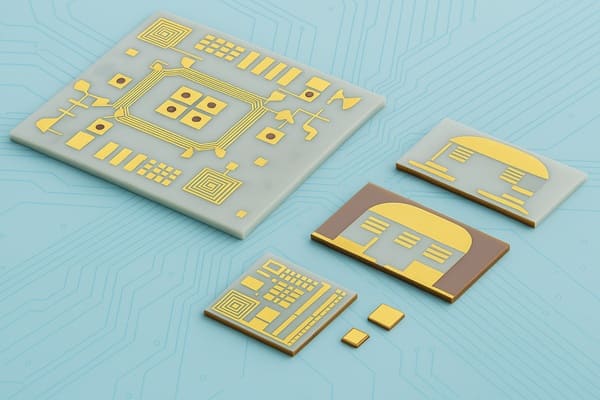
Electrical resistivity, measured in ohm-centimeters (Ω·cm), quantifies a material’s opposition to the flow of electric current. For alumina, its high resistivity (~10¹⁴ Ω·cm at 25°C) makes it an excellent electrical insulator, preventing current leakage in applications where electrical isolation is critical. This property stems from alumina’s ionic bonding and wide band gap (~9 eV), which limits the availability of free electrons for conduction. As a result, alumina is widely used in environments requiring robust insulation, such as high-voltage insulators and electronic substrates.
The significance of alumina’s resistivity extends to its ability to maintain performance across a range of conditions. For instance, in spark plugs, alumina’s high resistivity ensures reliable ignition by preventing electrical arcing. In electronics, it serves as a substrate for integrated circuits, where its insulating properties protect sensitive components. However, resistivity is not a static property—it can be influenced by various factors, which we will explore in detail.
Purity of Alumina
One of the most significant factors influencing the electrical resistivity of alumina is its purity. The presence of impurities or contaminants can drastically change the electrical properties of alumina. High-purity alumina typically exhibits very high resistivity, making it an ideal choice for electrical insulation. However, impurities such as metal oxides, silica, or other elements can introduce conduction pathways within the material, lowering its resistivity and altering its performance.
1. High-Purity Alumina (≥99.9%)
✅Typical Resistivity: 10¹⁵–10¹⁶ Ω·m (excellent insulator)
✅Mechanism:
- Fewer defect states (e.g., oxygen vacancies, interstitial cations) that could facilitate charge transport.
- Minimal impurity phases (e.g., SiO₂, Na₂O) that could create conductive pathways.
2. Commercial-Grade Alumina (96–99%)
✅Typical Resistivity: 10¹³–10¹⁵ Ω·m (slightly reduced insulation)
✅Key Impurities & Their Effects:
| Impurity | Effect on Resistivity | Mechanism |
| Silica (SiO₂) | ↓ Resistivity (~10¹³ Ω·m) | Forms glassy grain boundaries → ionic conduction |
| Soda (Na₂O) | ↓↓ Resistivity (10¹²–10¹³ Ω·m) | Introduces mobile Na⁺ ions → ionic leakage |
| Iron (Fe₂O₃) | ↓↓↓ Resistivity (10¹⁰–10¹² Ω·m) | Enables electron hopping between Fe²⁺/Fe³⁺ |
The level of purity required depends on the intended application. For high-performance insulators in electrical systems, ultra-pure alumina is essential, while in less demanding applications, a lower purity alumina may suffice.
Looking for top-quality alumina products? Explore Advanced Ceramics Hub’s selection.
The Influence of Microstructure and Porosity on Alumina Electrical Resistivity
The microstructure of alumina, which includes the size and distribution of its grains, as well as the porosity, can significantly affect its electrical resistivity. The grain size in alumina is often controlled during the manufacturing process. Smaller grains typically result in higher resistivity, as there is less opportunity for charge carriers to move across boundaries. On the other hand, larger grains might create pathways for electrical conduction, reducing resistivity.
Porosity, or the presence of voids within the material, also plays a significant role in electrical resistivity. A more porous alumina has more space for free electrons or ions to move, which lowers its resistivity. Conversely, a dense, low-porosity alumina will generally exhibit higher resistivity due to the reduced availability of conduction pathways.
Microstructural Features Affecting Resistivity
A. Grain Size & Boundaries
✅Fine-Grained Alumina (1–5 µm):
- Higher resistivity (10¹⁵–10¹⁶ Ω·m) due to tortuous conduction paths and increased grain boundary scattering.
- Challenge: Overly fine grains may retain sintering aids (e.g., MgO), altering boundary chemistry.
✅Coarse-Grained Alumina (>10 µm):
- Lower resistivity (10¹³–10¹⁴ Ω·m) due to fewer grain barriers.
- Risk: Pore coalescence at boundaries → localized current leakage.
B. Grain Boundary Chemistry
✅Pure Boundaries: Act as resistivity enhancers by trapping charges.
✅Impurity-Rich Boundaries (SiO₂, CaO):
- Form conductive glassy phases → ionic leakage (↓ resistivity to 10¹²–10¹³ Ω·m).
- Example: 96% Al₂O₃ with silica sintering aids exhibits 10× lower resistivity than 99.9% Al₂O₃.
Where Microstructure Matters Most:
- High-Frequency Insulators: Require nanograined, dense Al₂O₃ to minimize dielectric loss.
- High-Voltage Components: Demand pore-free, coarse-grained structures to prevent arcing.
- Humid Environments: Use glaze-coated porous Al₂O₃ to block surface leakage.
Porosity Effects on Resistivity
A. Porosity Percentage
| Porosity Level | Resistivity Trend | Mechanism |
| <2% (Dense) | Highest (10¹⁵–10¹⁶ Ω·m) | Minimal conduction pathways |
| 5–10% | Moderate (10¹³–10¹⁴ Ω·m) | Isolated pores slightly hinder conduction |
| >15% (Porous) | Lowest (10¹⁰–10¹² Ω·m) | Interconnected pores → surface conduction |
B. Pore Morphology
✅Closed Pores: Minimal impact (resistivity remains near dense values).
✅Open/Interconnected Pores:
- Allow surface conduction (adsorbed moisture/ions).
- Critical in humidity-sensitive applications (↓ surface resistivity by 3–4 orders).
The Influence of Temperature on Alumina Electrical Resistivity
Temperature plays a crucial role in determining the electrical resistivity of alumina. As with most materials, the resistivity of alumina tends to change with temperature variations. Generally, as the temperature increases, the resistivity of alumina increases as well. This behavior is primarily due to the nature of its crystal structure and the movement of charge carriers.
At higher temperatures, alumina’s lattice vibrations become more intense, which leads to a greater resistance to the flow of electrons or other charge carriers. Additionally, as temperature increases, thermal energy can cause structural changes in the material, such as the expansion of the grain boundaries, further affecting its resistivity.
Fundamental Temperature-Resistivity Relationship
| Temperature Range | Resistivity Trend | Governing Mechanism |
| Room Temp – 300°C | Near-constant (~10¹⁵ Ω·m) | Bandgap insulation dominates |
| 300°C – 800°C | Gradual increase (~10% per 100°C) | Defect ionization creates traps |
| 800°C – 1200°C | Exponential rise (10¹⁶-10¹⁷ Ω·m) | Ionic mobility decreases |
| >1200°C | Possible breakdown | Structural changes occur |
Atomic-Level Mechanisms
A. Defect Chemistry Dominance
✅Below 500°C:
- Intrinsic defects (Al vacancies Vₐₗ'”) act as electron traps
- Oxygen vacancies (V••ₒ) remain immobile
✅500-1000°C:
- Thermal excitation creates Frenkel pairs (Al⁺ interstitials)
- These defects scatter charge carriers, increasing resistivity
B. Impurity Effects at High Temperature
✅SiO₂-containing alumina:
Shows resistivity decrease above 800°C due to:
✓ Glassy phase softening → ionic conduction
✓ Na⁺ ion mobilization
✅MgO-doped alumina:
Maintains rising resistivity trend by:
✓ Stabilizing grain boundaries
✓ Preventing impurity migration
Practical Implications by Application
| Application | Temperature Challenge | Material Solution |
| IC Packages | ΔT during operation (~150°C) | Use 99.9% Al₂O₃ (stable ρ) |
| Spark Plugs | Rapid thermal cycling | MgO-doped fine grains |
| SOFC Components | Long-term 800°C exposure | ZrO₂-Al₂O₃ composites |
| Spacecraft Insulators | Cryogenic to 500°C swings | Ultra-pure HIP Al₂O₃ |
Discover our high-quality alumina ceramic products.
The Role of Dopants and Additives in Modulating Alumina Electrical Resistivity
Dopants and additives are often introduced to alumina to modify its electrical properties. These are typically small amounts of other materials added to alumina during processing. The presence of dopants can either increase or decrease the electrical resistivity, depending on their nature and concentration.
Insulating-Stabilizing Dopants:
| Dopant | Concentration | Resistivity Effect | Mechanism | Applications |
| MgO | 0.1–0.5 wt% | Maintains 10¹⁴–10¹⁵ Ω·m | • Suppresses grain growth • Passivates boundary defects | High-voltage insulators |
| Y₂O₃ | 0.5–2 wt% | Stabilizes ~10¹³ Ω·m | • Segregates impurities at boundaries • Reduces oxygen mobility | SOFC interconnects |
Resistivity-Reducing Dopants:
| Dopant | Concentration | Resistivity Range | Conduction Mechanism | Applications |
| TiO₂ | 0.5–5 wt% | 10⁶–10⁹ Ω·m | • n-type semiconductor • Ti³⁺/Ti⁴⁺ hopping | Electrostatic chucks |
| Fe₂O₃ | 1–3 wt% | 10⁸–10¹⁰ Ω·m | • Small polaron hopping • Fe²⁺ ↔ Fe³⁺ transitions | Discharge-resistant ceramics |
| Cr₂O₃ | 1–4 wt% | 10⁷–10¹¹ Ω·m | • Electron trapping/hopping | Humidity sensors |
Application-Specific Dopant Selection
| Application | Required ρ (Ω·m) | Recommended Doping |
| HV Insulators | >10¹⁴ | 0.3% MgO + 99.7% Al₂O₃ |
| ESD Protection | 10⁸–10¹⁰ | 2% Fe₂O₃ + 98% Al₂O₃ |
| Semiconductor Tools | 10⁶–10⁸ | 3% TiO₂ + HIP processing |
| Humidity Sensors | 10⁷–10⁹ | 1.5% Cr₂O₃ + porous structure |
The choice of dopant is critical, as it determines whether alumina will behave as an insulator or conductor in specific applications.
Explore our optimized alumina products.
Impact of Environmental Conditions on Alumina Electrical Resistivity
Environmental conditions such as humidity, pressure, and atmospheric composition can also impact the electrical resistivity of alumina. These factors influence the behavior of charge carriers and the material’s interaction with the surrounding environment.
1. Humidity & Moisture Exposure
Surface vs. Bulk Effects
| Condition | Resistivity Change | Mechanism |
| Dry (RH < 5%) | ~10¹⁵–10¹⁶ Ω·m (bulk) | Pristine surface, minimal ion mobility |
| Humid (RH > 60%) | ↓ 3–4 orders (surface ρ ~10¹¹ Ω·m) | H₂O adsorption → protonic conduction |
| Submerged | ↓ 5+ orders (ρ ~10⁹ Ω·m) | Electrolyte penetration into grain boundaries |
Mitigation Strategies:
- Glazing/Coating: SiO₂ or polymer layers block moisture.
- High-Purity (>99.9%) Al₂O₃: Fewer grain boundaries for water ingress.
2. Atmospheric Composition Effects
A. Oxidizing vs. Reducing Atmospheres
| Atmosphere | Resistivity Trend | Mechanism |
| Air/O₂ (Oxidizing) | Stable ρ (~10¹⁵ Ω·m) | Maintains stoichiometric Al₂O₃ |
| H₂/CO (Reducing) | ↓ to 10⁸–10¹⁰ Ω·m | Oxygen loss → V••ₒ formation → n-type conduction |
| Vacuum | ↑ Initial ρ, then ↓ at >1000°C | Desorption → defect generation |
B. Corrosive Gases (Cl₂, SO₂)
- Chlorine Exposure: Forms AlCl₃ → ↓ ρ via ionic conduction.
- Sulfur Dioxide: Creates sulfate layers → ↑ surface ρ but ↓ bulk ρ over time.
3. Temperature-Humidity Synergy
| Condition | Resistivity Behavior | Failure Risk |
| 85°C/85% RH (JEDEC test) | Exponential ρ drop | Electrochemical migration |
| Thermal Cycling (ΔRH) | Hysteresis in ρ recovery | Microcrack formation |
4. Pressure & Mechanical Stress
| Condition | Resistivity Effect | Mechanism |
| Uniaxial Stress (100 MPa) | ↑ ρ (~10%) | Grain boundary decohesion |
| Hydrostatic Pressure (1 GPa) | ↓ ρ (~50%) | Bandgap narrowing |
| Tribological Wear | ↓ Surface ρ (arc tracking) | Carbonization from friction |
Understanding these environmental influences is essential for applications where alumina is exposed to changing conditions, such as in outdoor electrical systems or components in variable climates.
Request a custom quote for high-quality alumina products.
Applications Leveraging Alumina Electrical Resistivity
Alumina’s ultra-high electrical resistivity (10¹⁴–10¹⁶ Ω·m) makes it critical for:
✅Electronics & Electrical Engineering
- IC Packages & Substrates – Insulates high-power modules (>10¹⁵ Ω·m at 200°C).
- Spark Plugs – Withstands 40+ kV arcs (dielectric strength >25 kV/mm).
- RF/Microwave Components – Ensures low signal loss (tan δ < 0.0001) in 5G/6G systems.
- High-Voltage Bushings – Prevents tracking in outdoor power transmission (IEC 60112 compliant).
✅Energy Systems
- Battery Separators – Blocks internal short circuits (stable in liquid electrolytes).
- SOFC Interconnects – Minimizes electron leakage in fuel cells.
- Fusion Reactor Insulators – Resists plasma erosion while maintaining insulation.
✅Medical & Aerospace
- Implantable Sensors – Biocompatible with zero ionic leakage (ISO 6474 certified).
- Satellite Insulators – Stable in vacuum and atomic oxygen environments.
At Advanced Ceramics Hub, we supply optimized-grade ceramic products that comply with ASTM and ISO standards, ensuring outstanding quality and reliability.
Performance Advantages Over Competing Materials
| Property | Al₂O₃ | Comparison to Alternatives |
| Volume Resistivity | 10¹⁴–10¹⁶ Ω·m | >100× higher than Si₃N₄ |
| Dielectric Strength | 15–35 kV/mm | 2–3× better than BeO |
| Thermal Stability | Stable to 1000°C | Outperforms polymers (PTFE fails @ 260°C) |
| Corrosion Resistance | Inert to acids/alkalis | Superior to glass insulators |
Alumina’s electrical resistivity is influenced by a complex interplay of material composition, crystal structure, temperature, manufacturing processes, and environmental conditions. High purity and a well-ordered alpha-alumina structure maximize resistivity, while impurities and high temperatures can reduce it. Manufacturing techniques like sintering and environmental factors like humidity further shape alumina’s performance as an insulator. By understanding and controlling these factors, we can optimize alumina for applications ranging from electronics to high-voltage systems.
The ability to tailor alumina’s resistivity through precise control of these factors opens up opportunities for innovation. Ongoing research into advanced processing techniques and composite materials promises to enhance alumina’s electrical properties, making it even more versatile for future technologies. Whether in current applications or emerging fields, alumina’s high resistivity remains a cornerstone of its utility, ensuring its continued relevance in material science.
For top-quality advanced alumina products, Advanced Ceramics Hub provides tailored solutions for various applications.
Looking for premium alumina materials? Contact us today!