
 English
  German
  French
  Spanish
 Screen Printing Mesh Selection in Ceramic Substrate Processing
Screen printing plays a crucial role in the manufacturing of ceramic substrates, especially for thick-film metallization in LTCC, HTCC, and MLCC ceramics. Selecting the right screen printing mesh ensures high-quality electrode patterns and accurate solder paste deposition on substrates such as AMB ceramics. This article examines the crucial factors in selecting screen printing mesh for ceramic substrates, offering a comprehensive guide for engineers and manufacturers to optimize printing precision, durability, and cost efficiency. We will analyze the main structural components of screen printing meshes, critical parameters for selection, and compare different ceramic substrate materials to illustrate their processing needs.
At Advanced Ceramics Hub, we specialize in high-quality ceramic substrate products, ensuring optimal performance for industrial and scientific applications.
What Is the Role of Screen Printing Mesh in Ceramic Substrate Processing?
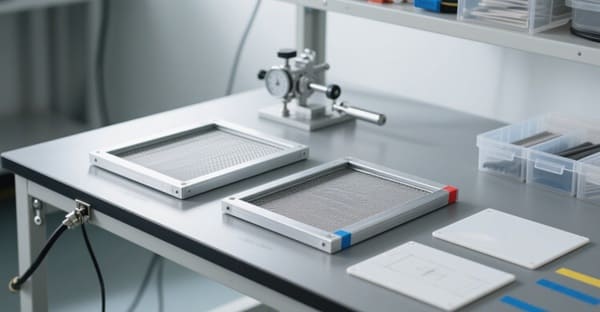
Screen printing mesh forms the backbone of thick-film electrode patterning on ceramic substrates. It determines the ink or paste deposition quality, directly affecting the electrical performance and adhesion strength of the printed layers. The mesh is composed of two main parts: the mesh frame and the mesh fabric (screen).
The mesh frame supports and tensions the fabric, while the mesh fabric controls the pattern resolution and ink flow. Proper mesh selection balances print accuracy, material compatibility, durability, and cost.
| Component | Description | Importance |
| Mesh Frame | Usually, aluminum or stainless steel provides tension | Prevents deformation, ensures repeatability |
| Mesh Fabric | Stainless steel or polyester wires woven into mesh | Determines ink transfer, print resolution |
Screen printing meshes must accommodate the demanding thermal and mechanical stresses in ceramic substrate manufacturing, making their correct choice vital.
Explore our high-quality ceramic substrate products.
What Are the Key Factors in Selecting a Mesh Frame for Ceramic Substrates?
The mesh frame holds the fabric taut and must maintain dimensional stability under tension and temperature variations during printing. The main considerations include:
- Strength: To withstand high tension without deforming during mesh stretching.
- Surface Roughness: To enhance adhesion between the mesh fabric and the frame.
- Durability: Resistance to corrosion and warping during repeated exposure to solvents and water.
Most ceramic substrate printing lines use solid aluminum frames due to their superior rigidity and stability. Compared to wooden or plastic frames, aluminum frames provide a longer lifespan and better print consistency, essential for high-precision LTCC and HTCC applications.
| Frame Material | Strength | Corrosion Resistance | Cost | Typical Use |
| Solid Aluminum | High | Moderate | Medium | LTCC, HTCC printing |
| Stainless Steel | Very High | Excellent | High | Specialized printing |
| Wood/Plastic | Low | Poor | Low | Low volume, prototyping |
How Does Mesh Fabric Affect Printing Quality on Ceramic Substrates?
Mesh fabric directly influences the precision of electrode patterns and paste deposition. The most important parameters include:
- Strength: High mesh strength ensures durability over mass production. Finer meshes tend to be weaker, so stainless steel fabrics are preferred for demanding applications due to their superior strength compared to polyester.
- Open Area Ratio: Open area affects the volume of paste transferred. A typical open area of around 40% is recommended to balance ink flow and image clarity for fine lines.
- Wire Diameter and Mesh Count: Mesh count (threads per inch) and wire thickness determine aperture size, impacting print resolution and ink deposit thickness. The aperture should be at least twice the wire diameter for stable printing.
| Parameter | Recommended Value for Ceramic Substrates | Impact |
| Mesh Count | 300 – 420 (for fine line printing) | Higher count = finer patterns |
| Open Area | ~40% | Controls paste volume and clarity |
| Wire Diameter | Stainless Steel 25 – 30 microns | Strength and print stability |
| Material | Stainless Steel preferred over Polyester | Durability, chemical resistance |
What Are the Recommended Mesh Tensions for Optimal Printing on Ceramic Substrates?
Mesh tension influences the mesh’s elasticity and the quality of ink transfer. Too high tension risks fabric deformation and premature wear, while too low tension reduces print sharpness and paste penetration.
- Optimal Tension Range: 15-25 N/cm for stainless steel mesh on ceramic substrate printing.
- Consequences of Improper Tension: Plastic deformation, poor print resolution, and inconsistent ink volume.
| Tension Level | Effect on Printing Quality | Recommendations |
| Low (<15 N/cm) | Poor snap-off, blurred prints | Increase tension gradually |
| Optimal | Sharp, clean prints with good paste transfer | Monitor tension regularly |
| High (>25 N/cm) | Fabric damage, reduced lifespan | Avoid excessive tension |
How Do Different Ceramic Substrates Affect Screen Printing Mesh Selection?
Ceramic substrates vary widely in their material composition, surface properties, and firing processes, which strongly influence the choice of screen printing mesh. Common ceramic materials used in electronic substrates include LTCC, HTCC, Alumina (Al2O3), Silicon Nitride (Si3N4), and Aluminum Nitride (AlN). Each material requires tailored mesh parameters to ensure high-quality printing and adhesion.
| Ceramic Material | Processing Temperature (°C) | Surface Roughness | Recommended Mesh Characteristics | Typical Applications |
| LTCC (Low Temp Co-fired Ceramic) | 850–900 | Smooth | Fine mesh (300–420), high tension | Multilayer circuits, sensors |
| HTCC (High Temp Co-fired Ceramic) | 1400–1600 | Rougher | Coarser mesh, high durability | High-power modules, harsh environments |
| Alumina (Al2O3) | 1500–1600 | Medium | Medium mesh count, balanced strength | Substrates for power electronics |
| Silicon Nitride (Si3N4) | 1700–1800 | Very smooth, hard | Fine mesh with high tensile strength | High thermal conductivity substrates |
| Aluminum Nitride (AlN) | 1700–1800 | Smooth | Fine mesh, high tension | High thermal management substrates |
For example, Alumina substrates require meshes that balance strength and print precision due to moderate surface roughness and high firing temperatures. Silicon Nitride and Aluminum Nitride, known for their superior thermal properties and smooth surfaces, demand fine meshes with excellent tensile strength to achieve precise patterns without defects.
By understanding the specific properties of these ceramic materials, manufacturers can select screen printing meshes that optimize ink transfer, adhesion, and durability tailored to each substrate type.
Request a custom quote for ceramic substrate products.
Why Is the Mesh Photo-Emulsion and Imaging Method Important for Ceramic Substrate Printing?
The mesh stencil’s pattern is created using photo-emulsion techniques, which determine print quality and resolution. Two main methods are:
- High-Performance Photo-Emulsion: Provides fine resolution and durability for repeated printing cycles.
- Laser Direct Imaging (LDI): Offers rapid, high-precision stencil creation, ideal for complex or fine-pitch ceramic substrate patterns.
The thickness and type of photo-emulsion affect edge sharpness and paste release, critical for fine line printing in ceramic electronics.
| Method | Resolution | Durability | Typical Use Case |
| Photo-Emulsion | High | Moderate | Standard thick-film printing |
| Laser Direct Imaging | Very High | High | Fine pitch, high precision |
How Does Screen Printing Mesh Selection Impact Ceramic Substrate Manufacturing Costs and Efficiency?
The right mesh choice balances upfront costs, mesh longevity, and print quality, ultimately affecting yield rates and production efficiency. Higher mesh counts and stainless steel materials cost more but improve print accuracy and reduce defects. Conversely, low-cost meshes might degrade faster, causing downtime and scrap.
| Mesh Type | Cost | Longevity | Print Quality | Suitability for High-Volume Production |
| Stainless Steel High Mesh Count | High | Long | Excellent | Best |
| Polyester Medium Mesh Count | Low | Short | Moderate | Limited |
What Are the Latest Trends in Screen Printing Mesh for Ceramic Substrates?
Recent innovations focus on improving mesh durability, print resolution, and eco-friendliness:
- Advanced Coatings: Anti-adhesion and corrosion-resistant coatings extend mesh life.
- Hybrid Materials: Combining stainless steel with synthetic fibers for optimized strength and flexibility.
- Automation and In-Line Tension Control: Enhance consistency and reduce manual error.
| Trend | Benefit | Industry Impact |
| Anti-adhesion Coatings | Easier cleaning, longer life | Reduced downtime |
| Hybrid Mesh Fabrics | Improved mechanical properties | Better print stability |
| Automated Tension Control | Consistent print quality | Higher yield |
How Does Screen Printing Compare to Other Ceramic Substrate Metallization Methods?
| Method | Resolution | Cost | Suitability for Ceramic Substrates | Advantages | Disadvantages |
| Screen Printing | Moderate | Low | High | Cost-effective, scalable | Limited to thicker lines |
| Photolithography | High | High | Medium | Very fine lines | Expensive, complex |
| Inkjet Printing | Variable | Medium | Emerging | No stencil needed, flexible | Lower throughput |
Screen printing remains the mainstream for thick-film metallization on ceramic substrates due to its balance of cost and performance.
FAQ
| Question | Answer |
| What mesh count is best for ceramic substrates? | Typically, between 300 and 420 mesh for fine electrode patterns. |
| Can polyester mesh be used in ceramic substrate printing? | Polyester is less durable; stainless steel mesh is preferred for long-term production. |
| How often should mesh tension be checked? | Before every print run to ensure consistent quality. |
| What photo-emulsion thickness is recommended? | Between 10-20 microns for optimal print resolution and paste release. |
| How does mesh open area affect printing? | Controls the amount of paste deposited; too high causes smearing, too low causes insufficient ink. |
Conclusion
Selecting the appropriate screen printing mesh is vital to achieving high-quality, reliable thick-film metallization on ceramic substrates. By understanding the key parameters such as mesh frame material, fabric strength, mesh count, tension, and imaging methods, manufacturers can optimize their processes to reduce defects and improve production efficiency. Different ceramic substrate types, including LTCC, HTCC, and MLCC, have unique requirements that must be considered in mesh selection. Staying abreast of emerging trends and technologies in screen printing meshes will help maintain competitive advantages in the rapidly evolving ceramic electronics industry.
Looking for high-quality ceramic substrate products? Contact us today!