
 English
  German
  French
  Spanish
 Methods for Synthesizing Boron Carbide
Boron carbide (B4C) is one of the hardest ceramic materials known, prized for its lightweight, high thermal stability, and exceptional chemical resistance. From armor systems to abrasives and neutron-absorbing materials, its utility spans a range of industries. However, the effectiveness of boron carbide in each of these applications depends significantly on the synthesis route. Different synthesis methods yield different purities, particle sizes, morphologies, and costs. Understanding and selecting the appropriate synthesis technique is critical for optimizing boron carbide’s performance in both traditional and emerging applications.
At Advanced Ceramic Hub, we specialize in high-quality boron carbide products, ensuring optimal performance for industrial and scientific applications.
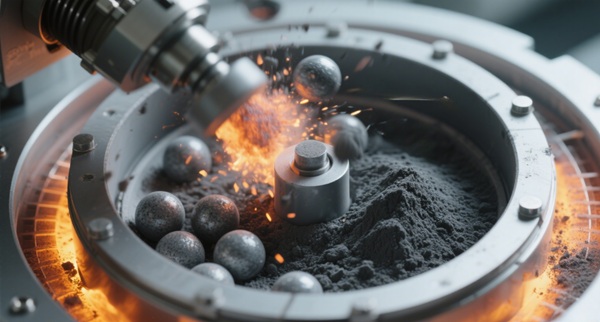
What Is Boron Carbide and Why Does Its Synthesis Matter?
Boron carbide is a boron–carbon ceramic compound typically expressed by the chemical formula B4C. Its unique icosahedral crystal structure imparts extreme hardness and a high melting point (~2763°C). Depending on the synthesis method, boron carbide may exhibit different physical properties such as grain size, stoichiometry, and defect density. These differences influence the final product’s sinterability, density, and mechanical performance, especially in magnetic and structural applications.
Key synthesis goals:
- Achieve high phase purity
- Control particle size distribution
- Reduce contamination risk
- Optimize for specific end-use cases
Explore our high-quality boron carbide ceramic product.
What Are the Primary Methods for Synthesizing Boron Carbide?
Various synthesis techniques are employed depending on the desired characteristics, cost, and scalability. Here are the most prominent methods:
| Method | Description | Typical Particle Size | Purity (%) | Common Use Cases |
| Carbothermal Reduction | B2O3 + C at high temperature | 1–10 µm | 95–99 | Bulk synthesis, armor materials |
| Sol-Gel Process | Hydrolysis of boron-carbon precursors | 50–500 nm | 98–99.5 | Ultrafine powders, coatings |
| Chemical Vapor Deposition | Gas-phase reaction for films or powder | <100 nm | >99 | Thin films, micro-devices |
| Microwave-Assisted Synthesis | Fast, uniform heating using microwave radiation | 100–500 nm | 95–98 | Sustainable powder production |
| Self-Propagating High-Temp (SHS) | Combustion reaction using elemental sources | 5–20 µm | 95–99 | Fast, large-scale powder synthesis |
Each method has its strengths and tradeoffs depending on the target application and processing requirements.
How Does Carbothermal Reduction Work in Boron Carbide Manufacturing?
Carbothermal reduction is the industry standard due to its scalability and cost-effectiveness. It involves mixing boron oxide (B2O3) with carbon and heating in an inert atmosphere (e.g., argon or nitrogen) at temperatures above 1600°C.
Advantages:
- Economical for large-scale production
- Simple and well-established process
- Yields sufficient purity for general use
| Parameter | Value |
| Temperature | 1600–2100°C |
| Time | 2–6 hours |
| Atmosphere | Argon/Nitrogen |
Despite being cost-efficient, it often requires additional grinding to reduce particle size.
What Are the Benefits of Sol-Gel Synthesis for Boron Carbide?
The sol-gel method uses liquid-phase chemistry to prepare a homogeneous precursor gel that is calcined to form B4C. This process offers precise control over particle size and purity, making it ideal for applications requiring nanoscale materials.
Benefits:
- Fine control over particle morphology
- Lower synthesis temperature
- Suitable for thin films and composites
| Parameter | Range |
| Temperature | 900–1400°C |
| Particle Size | 50–500 nm |
| Purity | 98–99.5% |
This method is ideal for specialty applications but has higher precursor costs and longer processing times.
How Is Chemical Vapor Deposition Used for Boron Carbide?
CVD involves chemical reactions of gaseous boron and carbon compounds on heated substrates. This high-purity method is excellent for forming films or uniform nano-powders.
Applications:
- Protective coatings
- Semiconductor components
- Neutron shielding in nuclear reactors
| Parameter | Value |
| Temperature | 900–1200°C |
| Film Thickness | Nanometers–Microns |
| Purity | >99% |
Due to its precision and cleanliness, CVD is preferred for high-tech applications, though not cost-effective for mass production.
Why Consider Microwave-Assisted Synthesis for Boron Carbide?
Microwave synthesis offers rapid, volumetric heating that reduces reaction time and enhances uniformity. It is gaining popularity for its energy efficiency and speed.
Advantages:
- Faster processing
- Reduced energy consumption
- Fine and homogeneous powders
| Parameter | Microwave | Traditional |
| Time | 10–30 mins | 2–6 hours |
| Particle Size | 100–500 nm | >1 µm |
| Energy Usage | Lower | Higher |
Microwave synthesis is promising for eco-conscious manufacturing but is still under development for scale-up.
What Are the Key Features of Self-Propagating High-Temperature Synthesis (SHS)?
SHS initiates an exothermic reaction that sustains itself after ignition. It requires minimal external energy and can produce boron carbide rapidly and efficiently.
SHS Highlights:
- Near-instantaneous reaction
- Energy efficient
- Good crystallinity
| Parameter | Value |
| Temperature | >2000°C |
| Particle Size | 5–20 µm |
| Reaction Time | Seconds |
SHS is well-suited for bulk powder production but may produce larger particles that require size refinement.
How Do Boron Carbide Synthesis Methods Compare to Other Ceramics?
To evaluate boron carbide in context, it’s essential to compare it with similar ceramics like silicon carbide, alumina, and titanium diboride in terms of synthesis, hardness, and application suitability.
| Material | Typical Synthesis Method | Hardness (GPa) | Density (g/cm³) | Common Uses |
| Boron Carbide (B4C) | Carbothermal, SHS, Sol-Gel | 30–38 | 2.52 | Armor, neutron absorbers |
| Silicon Carbide (SiC) | Carbothermal, CVD | 24–28 | 3.21 | Electronics, abrasives |
| Alumina (Al2O3) | Solid-state reaction | 15–20 | 3.95 | Substrates, wear parts |
| Titanium Diboride (TiB2) | SHS, hot pressing | 25–30 | 4.52 | Cutting tools, electrodes |
Boron carbide stands out for its extreme hardness and low density, making it superior for lightweight protective and nuclear shielding solutions.
Request a custom quote for boron carbide ceramic products.
How to Choose the Right Boron Carbide Synthesis Method?
Selecting the right method depends on the intended application, desired material characteristics, and production budget. The following comparative chart highlights key criteria:
| Method | Purity (%) | Particle Size | Energy Use | Cost | Use Case |
| Carbothermal Reduction | 95–99 | 1–10 µm | High | Low | Armor, abrasives |
| Sol-Gel Process | 98–99.5 | 50–500 nm | Medium | Medium-High | Fine powders, composites |
| Chemical Vapor Deposition | >99 | <100 nm (films) | High | High | Electronics, coatings |
| Microwave Synthesis | 95–98 | 100–500 nm | Low | Medium | Sustainable, lab-scale |
| SHS | 95–99 | 5–20 µm | Low | Low | Rapid bulk synthesis |
These metrics help R&D and production teams align their synthesis strategy with product and market needs.
FAQ
| Question | Answer |
| Which synthesis method is most cost-effective? | Carbothermal reduction is best for large-scale, low-cost production. |
| Can sol-gel powders be used in armor applications? | Typically no—best for coatings or small-component composites. |
| Is CVD ideal for bulk synthesis? | No, it is used mainly for thin, high-purity films. |
| Does microwave synthesis save time? | Yes, it reduces reaction times significantly. |
| How do synthesis methods affect boron carbide quality? | They influence particle size, purity, and structural performance. |
Conclusion
The route used to synthesize boron carbide directly shapes its physical performance, manufacturing cost, and market fit. From traditional carbothermal reduction to advanced CVD and SHS methods, each has its ideal use cases. Additionally, comparing boron carbide to other ceramic materials highlights its superior hardness-to-density ratio. As industries like defense, electronics, and energy evolve, mastering the nuances of boron carbide synthesis will be a cornerstone for innovation and material efficiency. Choosing the right method is not just technical—it’s strategic.
Looking for high-quality boron carbide product? Contact us today!