 English
  German
  French
  Spanish
 Can Zirconium Carbide Survive Hypersonic Flight Conditions? A Material Analysis
Hypersonic flight—defined as speeds exceeding Mach 5—represents one of the most extreme environments any engineered material can encounter. Surfaces of hypersonic vehicles experience intense aerodynamic heating, thermal shock, and corrosive atmospheric conditions. As a result, selecting materials for leading edges, nose cones, and thermal protection systems is a critical challenge.
Zirconium carbide (ZrC) has garnered attention due to its exceptionally high melting point, excellent thermal conductivity, and robust mechanical properties at elevated temperatures. This article provides a detailed technical and comparative analysis of zirconium carbide, examining whether it can truly meet the demands of hypersonic flight.
At Advanced Ceramic Hub, we specialize in high-quality zirconium carbide ceramic products, ensuring optimal performance for industrial and scientific applications.
What Is Zirconium Carbide and Why Is It Classified as a UHTC?
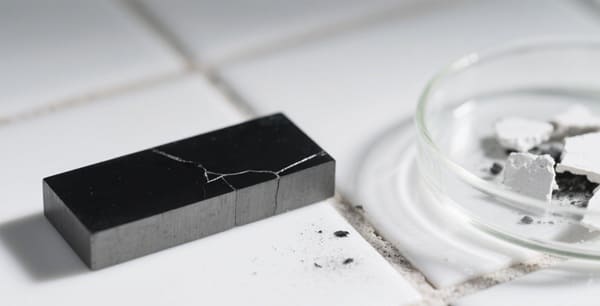
Zirconium carbide is a ceramic compound composed of zirconium and carbon. It belongs to a group of materials known as ultra-high temperature ceramics (UHTCs), which are defined by their ability to maintain structural integrity above 3,000°C.
Key Properties of Zirconium Carbide:
| Property | Typical Value |
| Melting Point | ~3,530°C |
| Density | ~6.73 g/cm³ |
| Hardness | ~25 GPa |
| Elastic Modulus | ~435 GPa |
| Thermal Conductivity | 17–31 W/m·K |
ZrC’s unique combination of thermal and mechanical stability makes it a compelling candidate for aerospace and defense applications requiring resistance to extreme heat and pressure.
Explore our high-quality zirconium carbide products.
How Does Zirconium Carbide Handle Hypersonic-Level Heat?
In hypersonic environments, surface temperatures can exceed 2,500°C. Materials must not only survive these temperatures but also retain their strength and structural integrity.
Zirconium Carbide Thermal Advantages:
- An exceptionally high melting point provides a large thermal safety margin.
- High thermal conductivity allows for efficient heat dispersion.
- Maintains crystalline structure at extreme temperatures.
- Can be combined with other ceramics to reduce thermal stress.
Comparison of UHTC Melting Points:
| Material | Melting Point (°C) |
| Zirconium Carbide | ~3,530 |
| Hafnium Carbide | ~3,958 |
| Tantalum Carbide | ~3,880 |
| Silicon Carbide | ~2,730 |
ZrC falls just below hafnium carbide in terms of melting point, while offering benefits in cost and weight.
Is Zirconium Carbide Mechanically Strong Enough for Hypersonic Stress?
Thermal loading is only one part of the equation. Hypersonic materials must also handle aerodynamic forces, vibrations, and potential impacts. ZrC performs well under these conditions, particularly in reinforced composite forms.
Mechanical Comparison:
| Material | Flexural Strength (MPa) | Elastic Modulus (GPa) |
| Zirconium Carbide | ~460 | ~435 |
| Carbon–Carbon | ~140–200 | 50–200 |
| ZrC–SiC Composite | ~500–700 | ~420 |
ZrC offers significantly higher strength and stiffness compared to many traditional aerospace ceramics.
How Does Zirconium Carbide Resist Oxidation in Flight?
One of zirconium carbide’s main weaknesses is its poor oxidation resistance above 800°C. In oxidizing environments, such as hypersonic atmospheric flight, ZrC can degrade rapidly if not protected.
Methods to Improve Oxidation Resistance:
- ZrC–SiC composites: Silicon carbide forms a protective SiO₂ layer during oxidation.
- High-entropy UHTCs: Multi-element combinations improve thermal stability.
- Protective coatings: Borosilicates or refractory metals provide barrier layers.
- Reactive infiltration techniques: Enhance surface resistance to oxygen attack.
These strategies allow ZrC-based systems to withstand oxidizing atmospheres up to 1,800°C when properly engineered.
How Does Zirconium Carbide Handle Thermal Shock and Cycling?
In hypersonic flight, materials experience repeated thermal cycling as the vehicle accelerates and re-enters the atmosphere. Rapid temperature changes can cause cracking or delamination if the material is not designed for thermal shock resistance.
Strategies for Thermal Shock Resistance:
| Method | Benefit |
| Composite Structures | Increase toughness and energy absorption |
| Graded Interfaces | Reduce internal thermal stress |
| Fiber Reinforcement | Minimize crack propagation |
Monolithic ZrC is brittle, but in composite or hybrid forms, it becomes significantly more resistant to thermal cycling.
What Are the Pros and Cons of Zirconium Carbide in Aerospace?
Every material offers a balance between strengths and trade-offs. Zirconium carbide is no exception.
Advantages:
- Exceptional thermal resistance
- High mechanical strength and stiffness
- Relatively high thermal conductivity
- Suitable for extreme aerothermal conditions
Disadvantages:
- Poor oxidation resistance on its own
- High density compared to lightweight alternatives
- Difficult processing and sintering
- Brittle unless reinforced or composited
Its best performance is achieved when ZrC is used as part of engineered composite materials rather than as a standalone component.
How Does Zirconium Carbide Compare to Other Hypersonic Ceramics?
To better evaluate ZrC’s potential, it helps to compare it with other commonly used or proposed ceramics for hypersonic vehicles.
Zirconium Carbide vs. Other Ceramics:
| Property | ZrC | HfC | SiC | ZrB₂–SiC | Al₂O₃ |
| Melting Point (°C) | 3,530 | 3,958 | 2,730 | ~3,200 | 2,050 |
| Thermal Conductivity | 17–31 | 20–25 | 120 | 60–120 | ~25 |
| Oxidation Resistance | Poor | Poor | Excellent | Good | Excellent |
| Density (g/cm³) | 6.7 | 12.2 | 3.2 | 6.1 | 3.9 |
| Cost and Processing | High | Very High | Moderate | High | Low |
ZrC offers excellent high-temperature capabilities, but sacrifices oxidation resistance and lightweight properties compared to SiC or Al₂O₃.
Request a custom quote for zirconium carbide or graphite products.
Has Zirconium Carbide Been Used in Hypersonic Programs?
While not yet standard in production hypersonic vehicles, ZrC and its composites have been tested in multiple research programs and simulation environments.
Examples of Use:
- Leading-edge tests using ZrC–SiC in plasma wind tunnels
- ZrC-coated carbon–carbon composites evaluated for missile nose cones
- Integration in high-temperature wing tiles in lab-scale prototypes
- ZrC–TiC–B solid solutions tested for ablation resistance
These tests confirm zirconium carbide’s promise—especially when paired with reinforcement strategies.
What Research Trends Are Advancing Zirconium Carbide for Hypersonics?
ZrC research is moving rapidly. Innovations in processing, reinforcement, and hybrid materials are bringing zirconium carbide closer to deployment.
Current Trends:
- High-entropy ZrC ceramics: Improve thermal and oxidation performance
- Additive manufacturing: Enables complex shapes with fine microstructure
- ZrC–CMC hybrids: Combine ZrC performance with lightweight reinforcement
- Self-healing materials: Enable long-term durability under damage
As aerospace materials evolve, ZrC continues to play a critical role in thermal protection development.
FAQ
| Question | Answer |
| Can ZrC survive Mach 5+ conditions? | Yes, in composite or coated form with proper oxidation control |
| Is ZrC heavier than carbon–carbon? | Yes, significantly more dense |
| Can ZrC be used in re-entry applications? | Yes, especially with protective ceramic matrices |
| Is ZrC currently used in real aircraft? | Mostly experimental and under evaluation |
| What makes ZrC unique? | It’s a combination of high temperature capability and strength |
Conclusion
Zirconium carbide is undeniably one of the most promising ultra-high temperature materials for next-generation hypersonic systems. Its ability to withstand extreme heat and retain mechanical strength makes it ideal for leading edges and thermal shields. However, its limitations—especially in oxidation resistance—require careful engineering solutions. By combining ZrC with other materials such as SiC or integrating it into advanced composites, many of these challenges can be overcome.
With continuing advancements in material science and aerospace design, zirconium carbide is poised to play a vital role in the development of hypersonic technology.
Looking for high-quality zirconium carbide? Contact us today!